Story Noº 6 / 151: Empty Land

Noº 6/151: Empty Land
Collection: Sundays in the Solarium
I’ve been thinking about what it means to be alone—properly alone. Not lonely. Not abandoned. Alone as in: there is no one else here, and nothing is expected of you as a result.
That’s where this photograph begins.
There’s a man—Adam before Eve, perhaps—standing inside a cave somewhere in México. The cave is dark, and then quite abruptly there is light. A tree growing impossibly out of stone. Origami butterflies folded precisely out of tracing paper. A body standing there as if bodies had never learned embarrassment.
He doesn’t seem to account for being seen.
That’s the part I kept returning to.
Not that the model has anything to be self-conscious about. Quite the opposite. But there’s a difference between a body being admired and a body performing admiration for itself. Most people become slightly edited the moment they know they are being looked at.
His body doesn’t know that yet.
It simply exists inside the logic of the cave: light, stone, silence, skin.
But I’m getting ahead of myself.
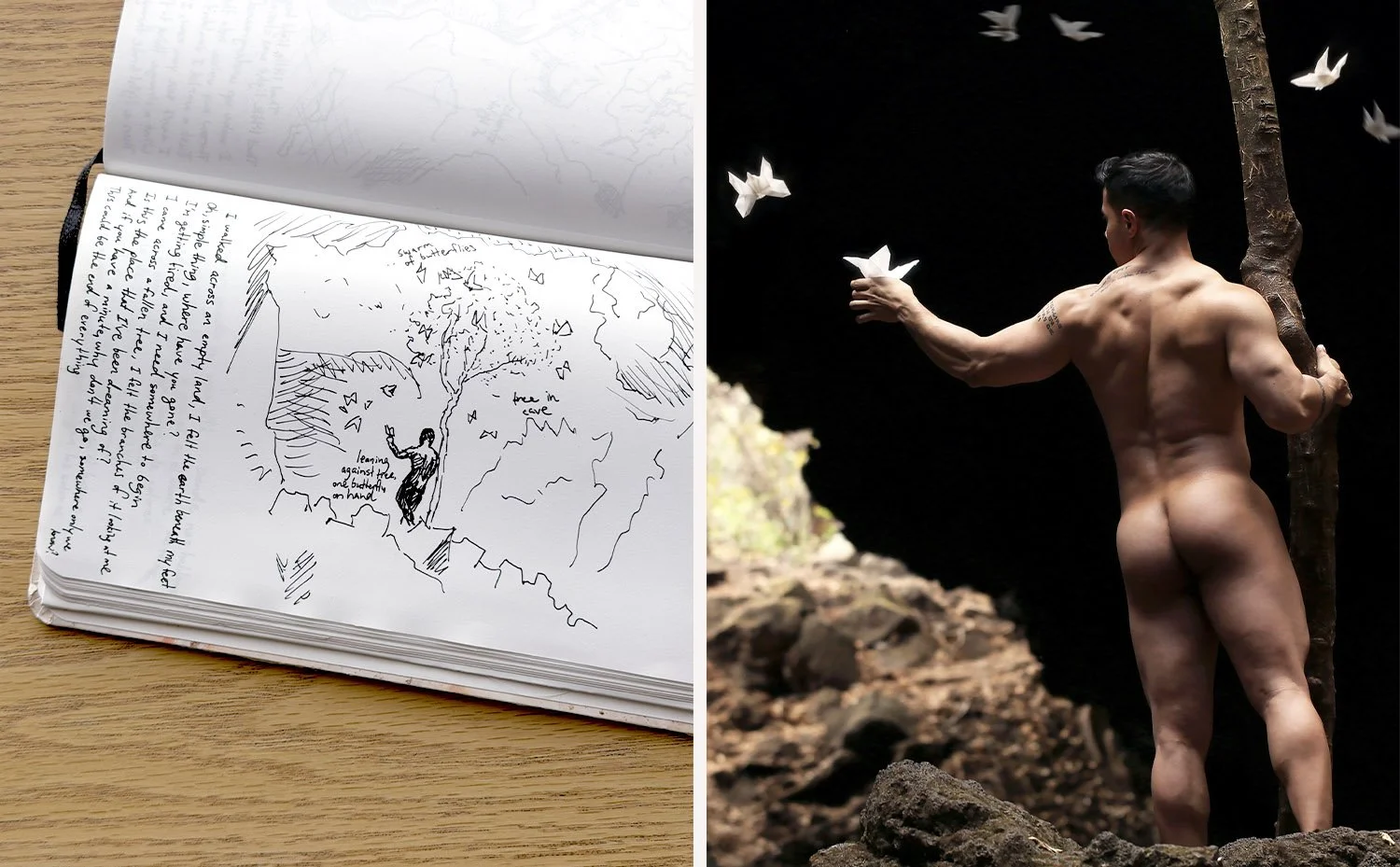
Before there was a cave, or a tree, or a man standing naked in a beam of light, there was a song.
Somewhere Only We Know by Keane.
It was the first song I ever performed in front of an audience. High school. I sang it with Jill Jackson, the last girl I ever pursued romantically before coming out as gay.
You’re given a version of yourself you’re expected to perform. A register. A script. You spend years trying to inhabit it convincingly enough that nobody notices the strain.
You think: this could be the end of everything. And then, sometimes accidentally, your real self appears.
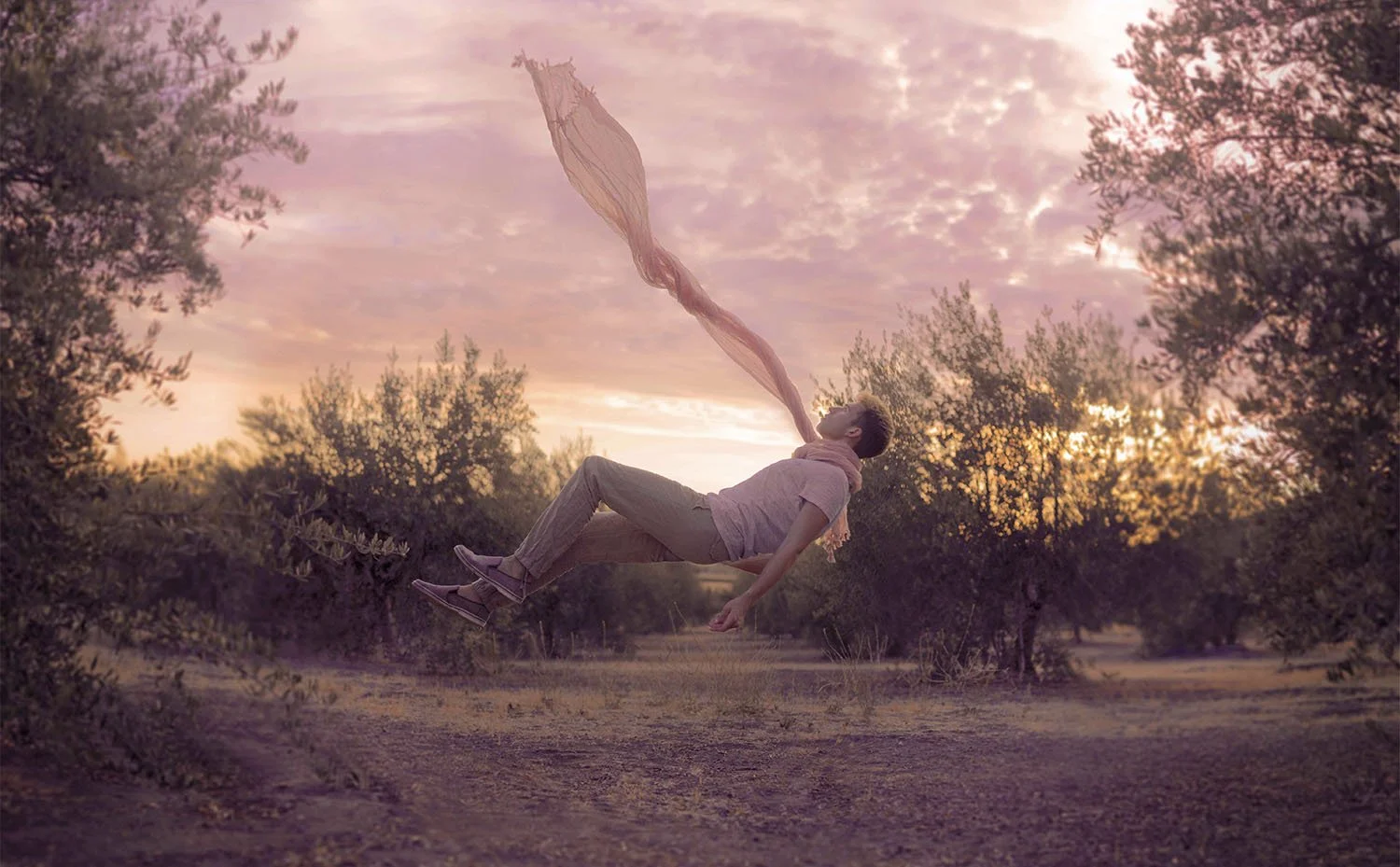
Early artwork inspired by same song in 2014
Even the butterflies arrived there by accident.
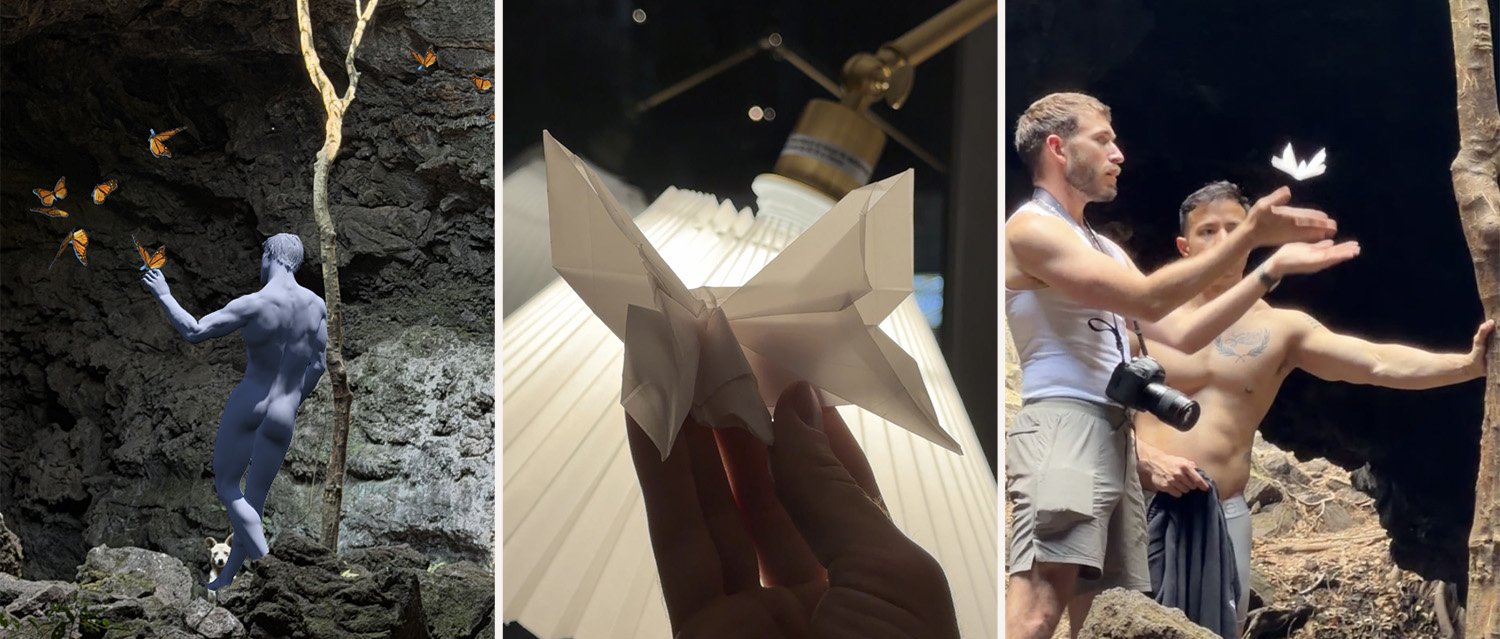
Originally they were meant to be real butterflies—probably monarchs. But, ironically, I couldn’t source them in Mexico City, and eventually the failure itself suggested the solution.
Origami.
Simple things made from tracing paper thin enough for light to pass through them.
I think that’s partly why the photograph became what it is.
The image isn’t an illustration of the song. That would be too literal and far less interesting. It’s closer to a translation. Taking something that exists in sound and memory and rebuilding it through paper, light, texture, and space.
The emotional architecture came from a recurring mental image I’ve had for years: a labyrinth. Somewhere inside it, hidden beyond several turns, there’s a door. Behind that door, another place. Then another door. Another room. Each space feels further removed from the world outside.
Eventually you arrive somewhere impossibly calm.
A hidden place no one would find unless they were determined to keep going.
So, tell me when you're gonna let me in I’m getting tired and I need somewhere to begin
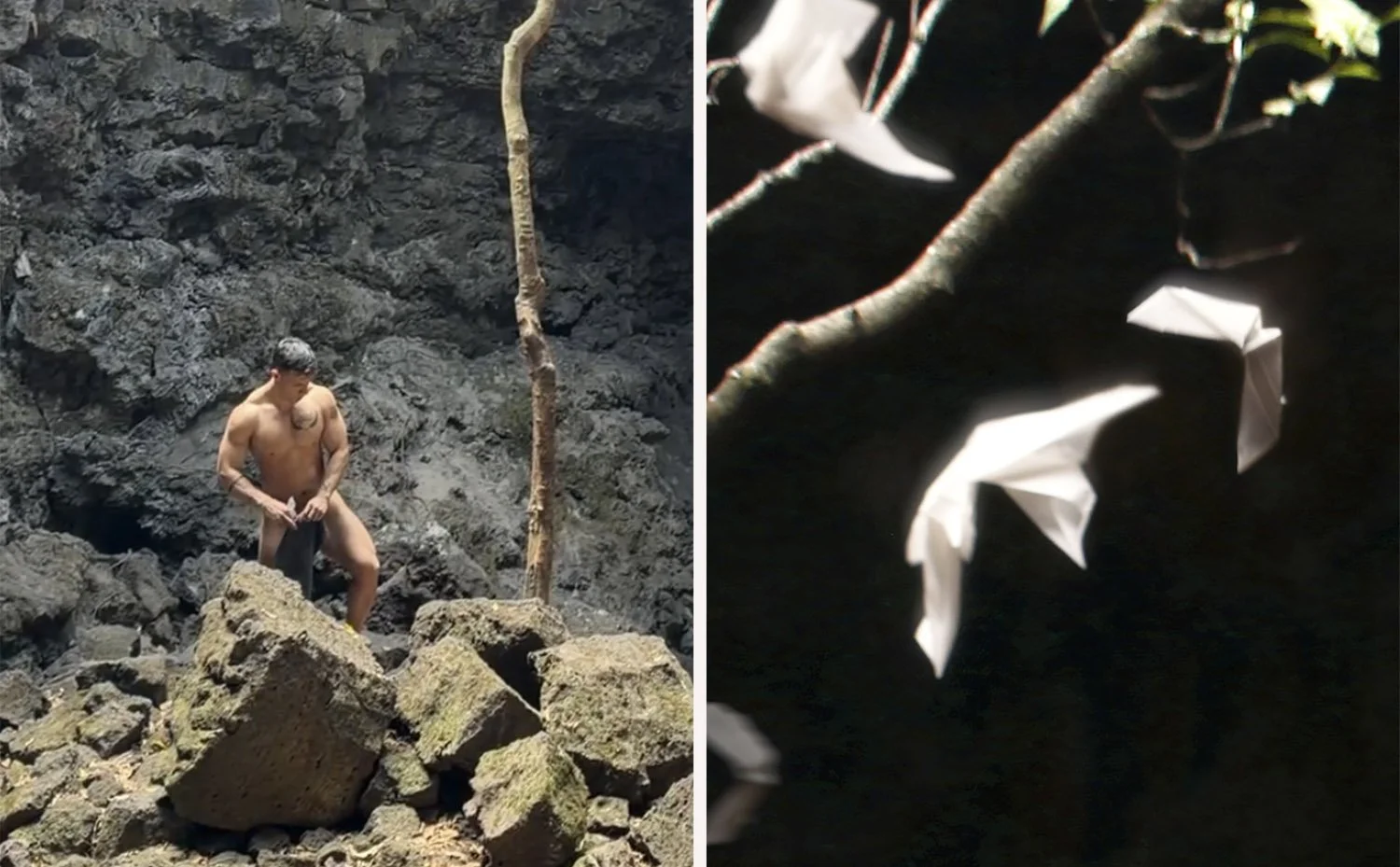
That feeling is what I wanted the photograph to hold.
It would have been easy to make the image about loneliness. The cave, the nudity, the isolation. All the ingredients are there.
But loneliness isn’t actually what interests me here.
The place I’ve been dreaming of is relief.
The relief of no longer performing. A place, removed from expectation. A light, found rather than given.
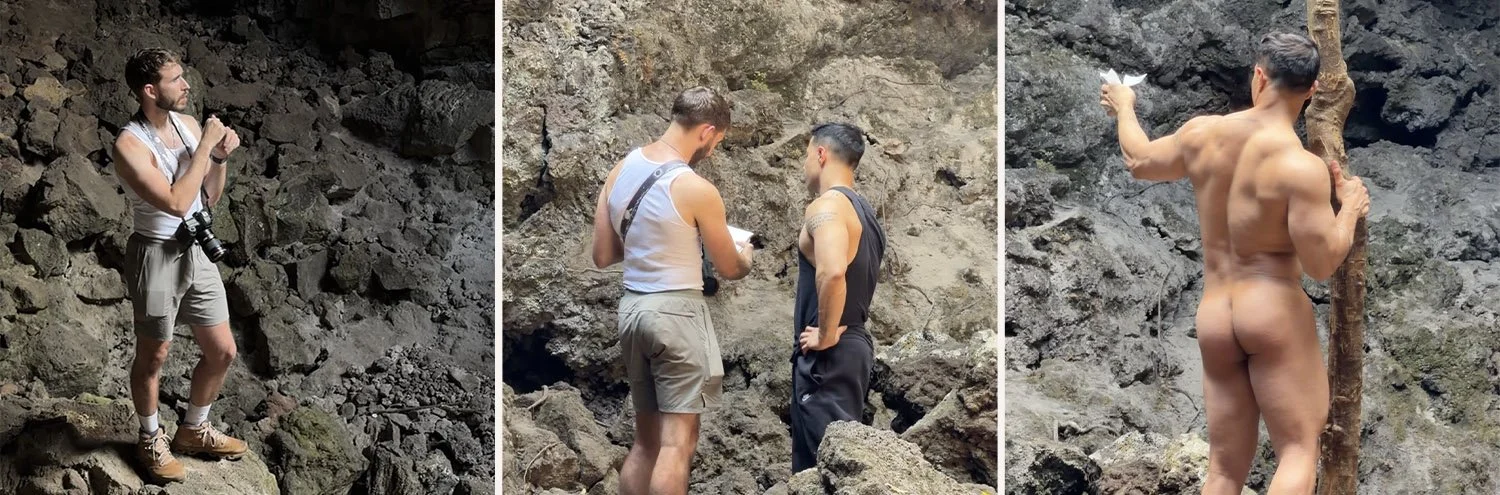
If this was worth your time, pass it on.
This work will become a book.
Photographs and field notes by James Miille
Words by Jona Montoya