Story Noº 3 / 151: My Fickle Friend
Noº 3/151: My Fickle Friend
Collection: Behind the Pool House
The photograph shouldn’t have worked.
Wrong day. Wrong light.
It was a grey day at Black’s Beach. A low ceiling of cloud pressing everything flat into a dull, even wash—the kind of light that makes everything visible and uninteresting. A beach that looks promising in theory—wide, open, suggestive—but gives you nothing when it’s time to actually make something.
We managed one usable image earlier, when the sun briefly broke through. After that, the sky closed.
So we waited.
Photographers are very good at waiting for things that aren’t coming. We call it patience. Sometimes it’s just denial with better branding. You convince yourself the situation is about to improve—that just beyond the current inconvenience lies the version of events you had in mind when you began.
It’s rarely true. But the belief keeps you there.
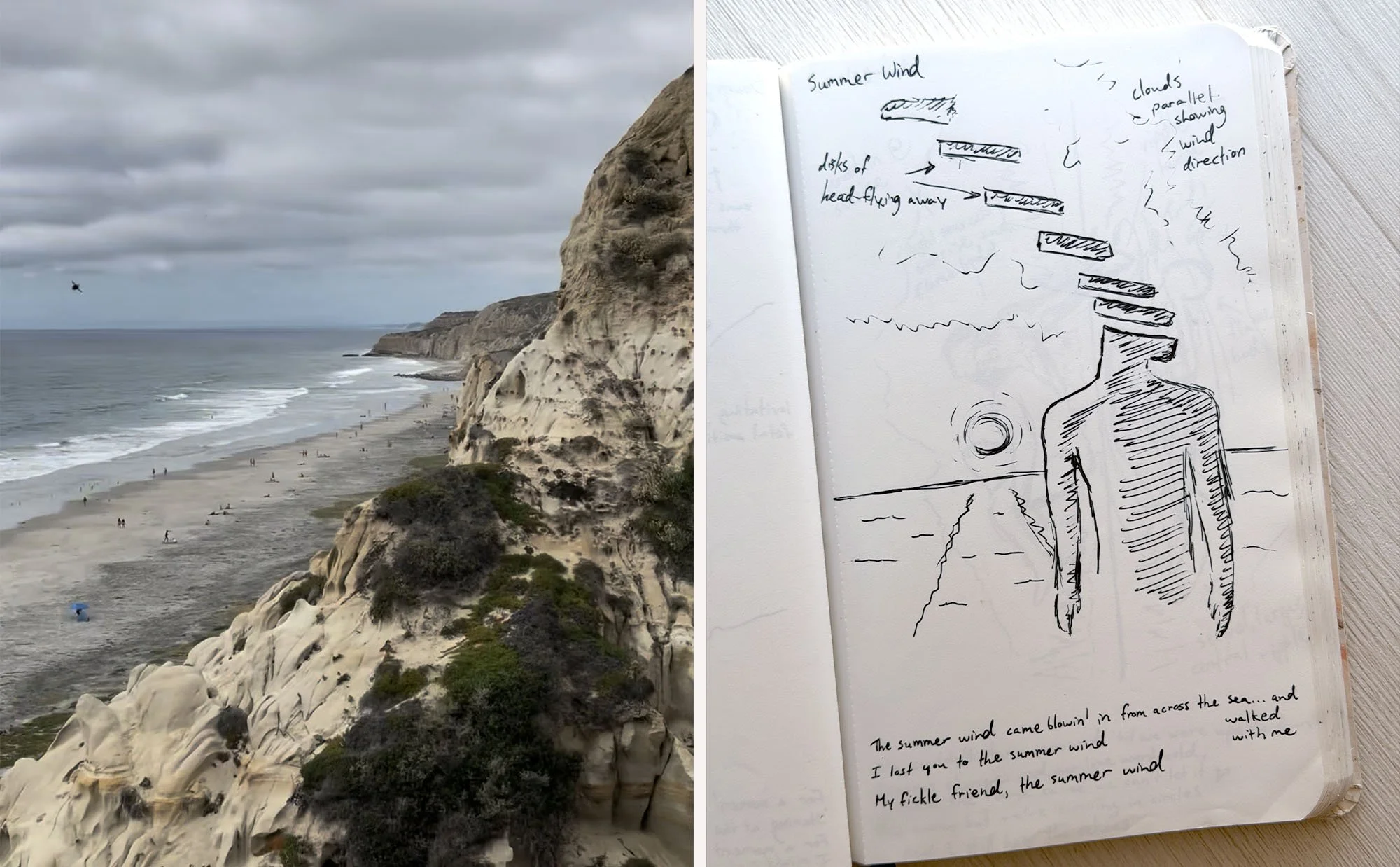
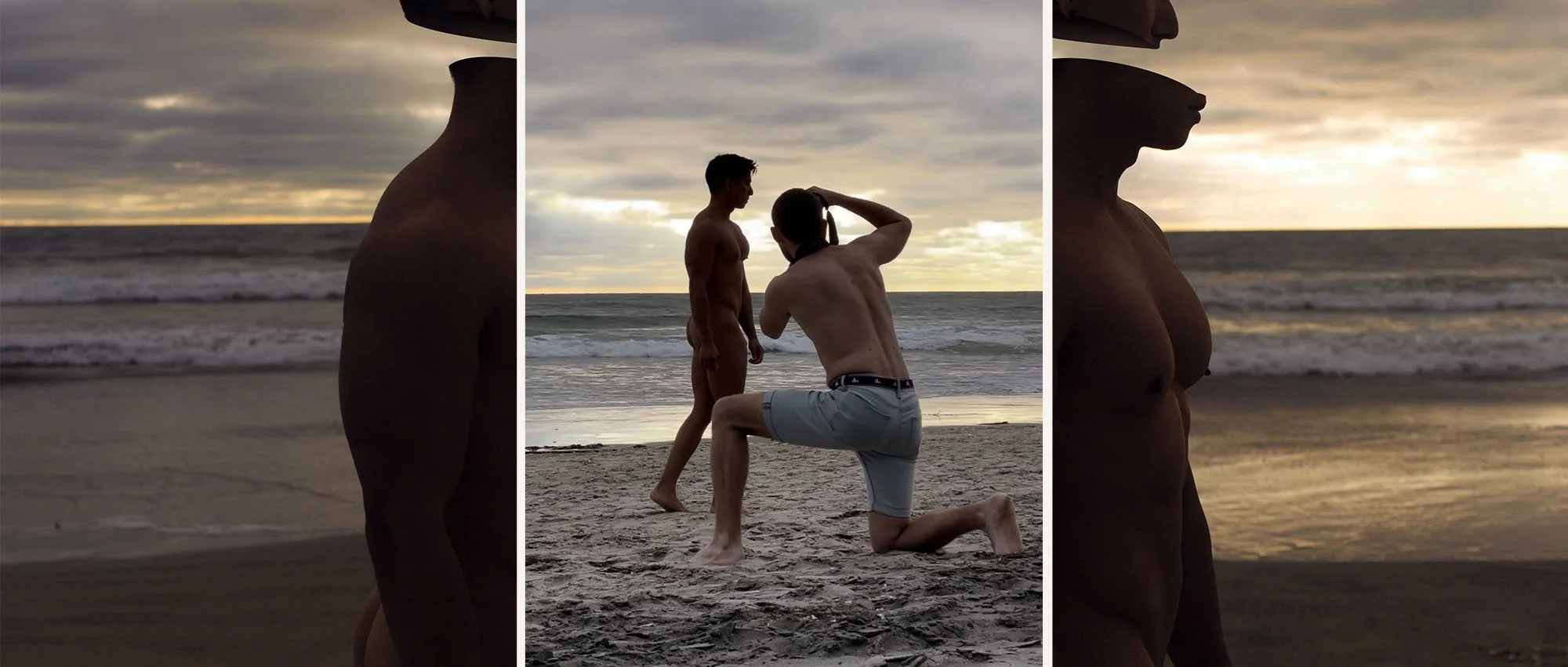
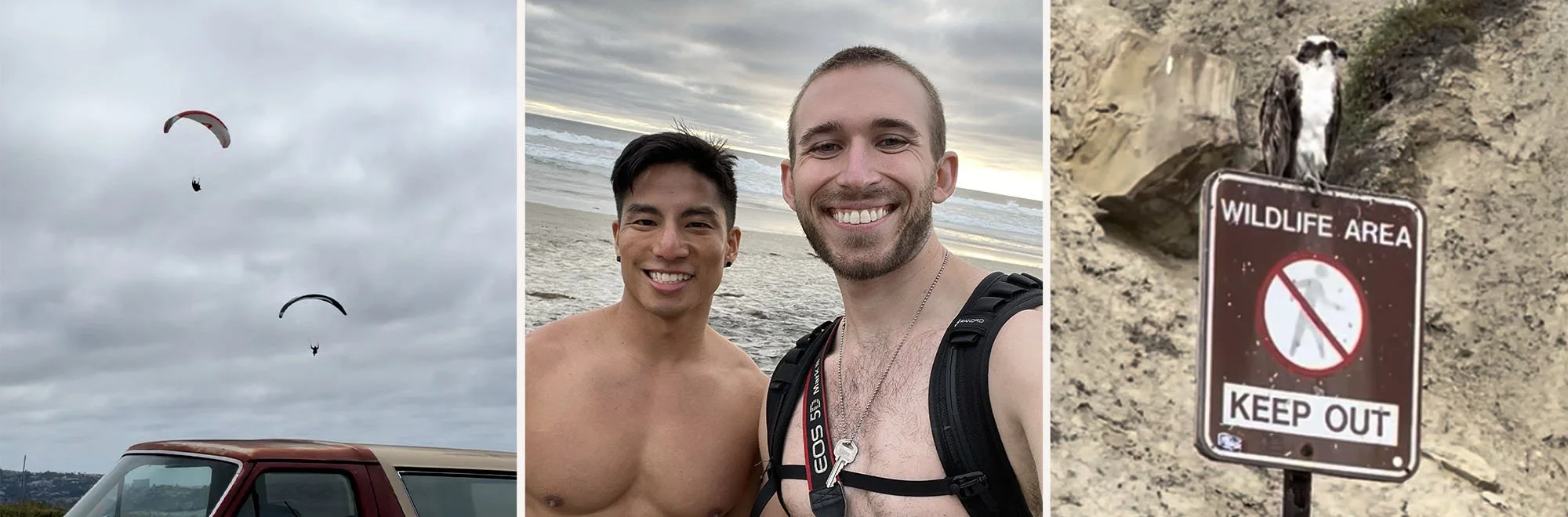
I was there with Duskdream—the model I’ve photographed more than anyone else over the past five years. Familiarity simplifies things. Less performance. Fewer negotiations. You arrive, you look, you wait.
Then comes a point when waiting becomes a refusal to accept where you are. It’s a mild form of arrogance, really—the insistence that reality should adjust itself to your expectations.
Eventually, I gave that up.
Because the light didn’t improve. It revealed itself differently.
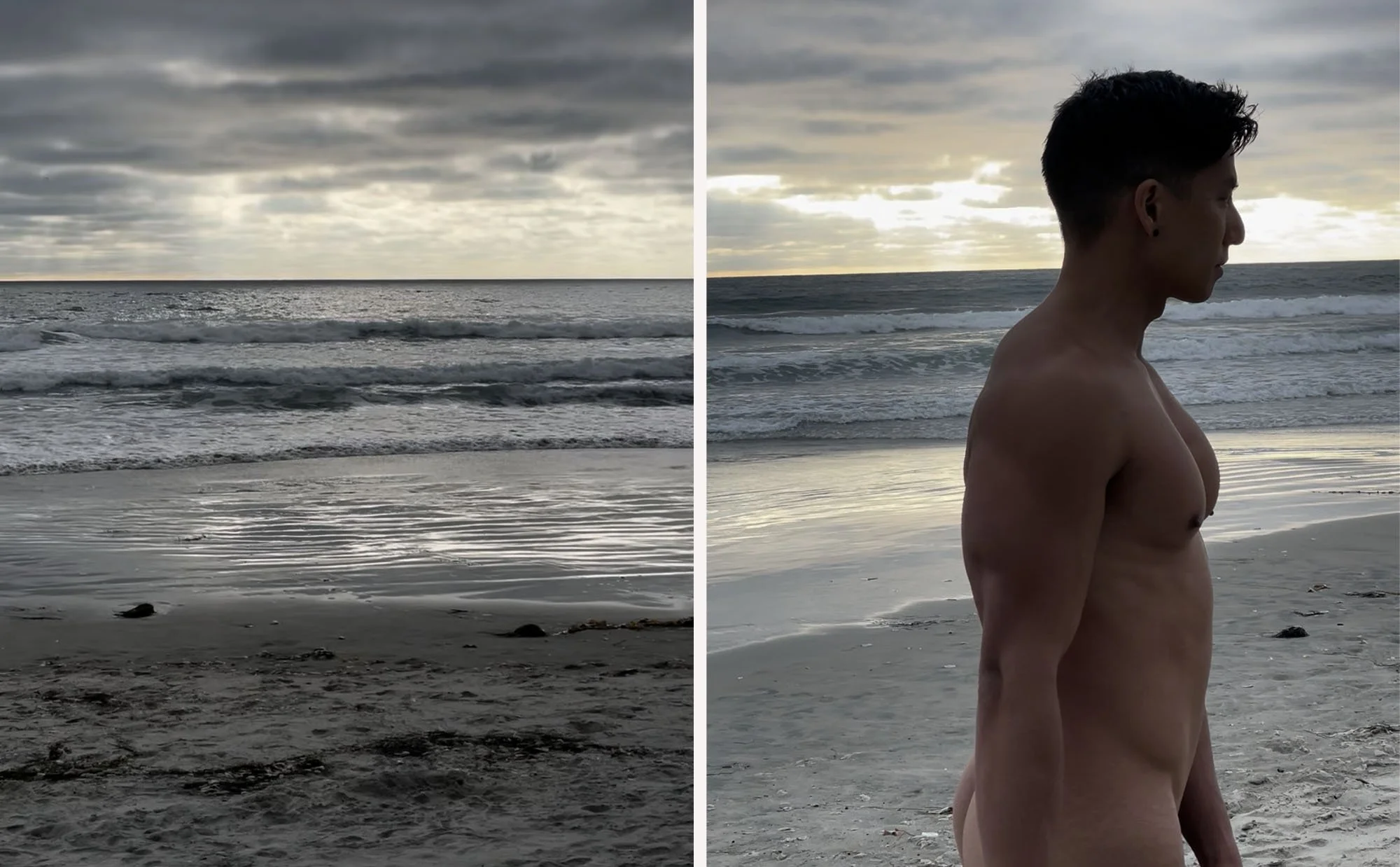
The sun was already lowering toward the horizon, pushing through the clouds in fragments. On the left side of the frame, nothing—no warmth, no generosity. On the right, a faint, diluted gold, reflected through the water.
It splits the image in two.
It was not beautiful. But it was usable.
He started walking.
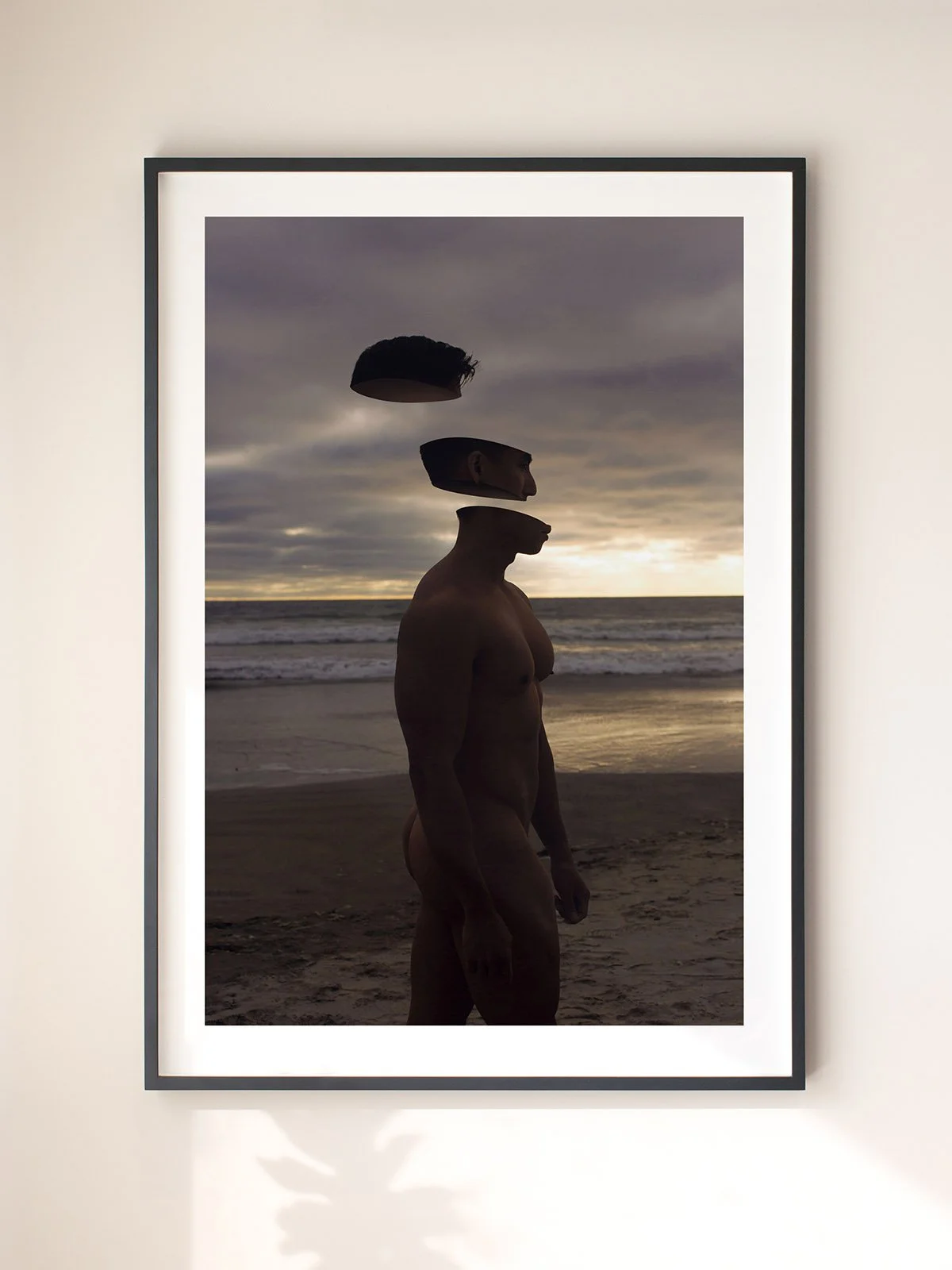
Broad shoulders, a full chest softened by the light, thick through the waist, strength sitting low in the hips—the glutes doing their job—legs grounded, arms hanging heavy.
No cue. No direction. Just the body doing what bodies do when there’s nothing left to wait for—move.
And in that movement, the photograph locked into place.
Looking at it now, it feels almost too legible. A body moving from darkness into light. The oldest visual metaphor we have, and still, it works. You don’t need to explain it. The eye reads it before the brain has time to interfere.
But it doesn’t land clean. The light suggests something hopeful. The feeling doesn’t.
Those fragments of his head—the slight disintegration—feel like that. Not breaking, but shedding. The parts of you that don’t follow into what comes next stay behind.
That’s what I see.
Which doesn’t matter very much.
Because when people looked at it, they didn’t talk about any of that. They talked about themselves. About walking. About those long, unnecessary walks you take when something in your life doesn’t quite fit and you don’t have the language for it.
You just move.
Not to arrive anywhere, but until the problem shifts, or becomes tolerable. Street after street. Or along the shoreline. Let the body think for you.
It’s a very human solution.
The photograph—by doing very little—gives them room.
It’s a silhouette. No face, no fixed identity. You don’t have to understand him. You step into him.
I didn’t think much of it at first.
It didn’t perform online. Which is almost funny—there’s a naked body in it, and still, nothing. It has everything that should work, but none of the aggression the internet rewards. It doesn’t offer itself.
It doesn’t say: take me.
It doesn’t say anything at all.
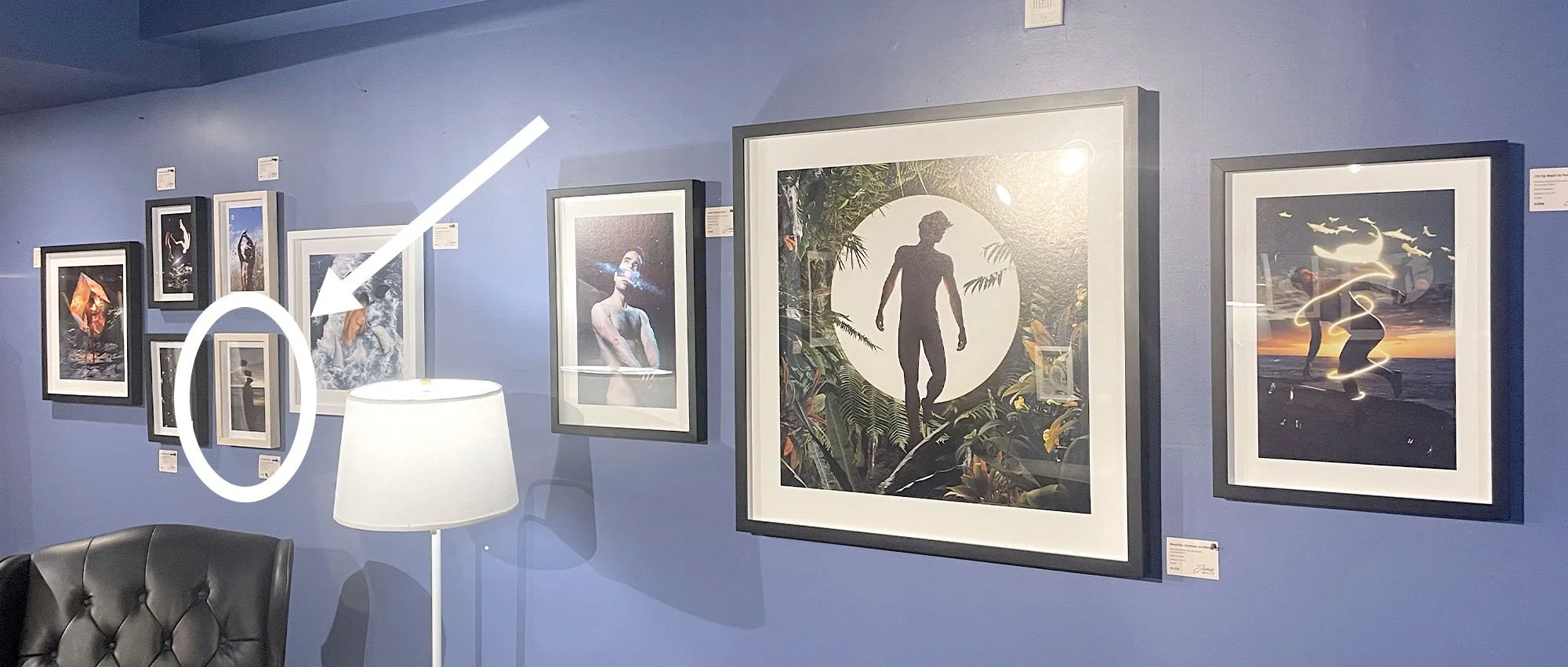
So I printed it small.
Put it in the corner. Where quiet things go to be ignored.
And still, people found it.
They stayed with it. Came back to it. Bought it. Again and again. As if the size didn’t matter. As if the placement didn’t matter. As if the photograph had already decided where it belonged.
It ruined the idea that effort is a measure of impact.
The audience doesn’t see the hours, the setups, the decisions. They see a moment. And if that moment is clear enough—emotionally, not technically—it lands.
Sometimes simple is better.
The title came from “The Summer Wind”. A song about something that arrives, changes you slightly, and disappears before you can hold onto it.
A fickle friend.
The one that didn’t stay long enough to be understood, but long enough to rearrange something inside you.
We like to think we recognize those moments while we’re in them. We don’t. We’re too busy waiting for better light.
You notice later.
When you’re no longer who you were—and already walking.
If this was worth your time, pass it on.
This work will become a book.
Photographs and field notes by James Miille
Words by Jona Montoya