Story Noº 4 / 151: I Still Hear the Echoes
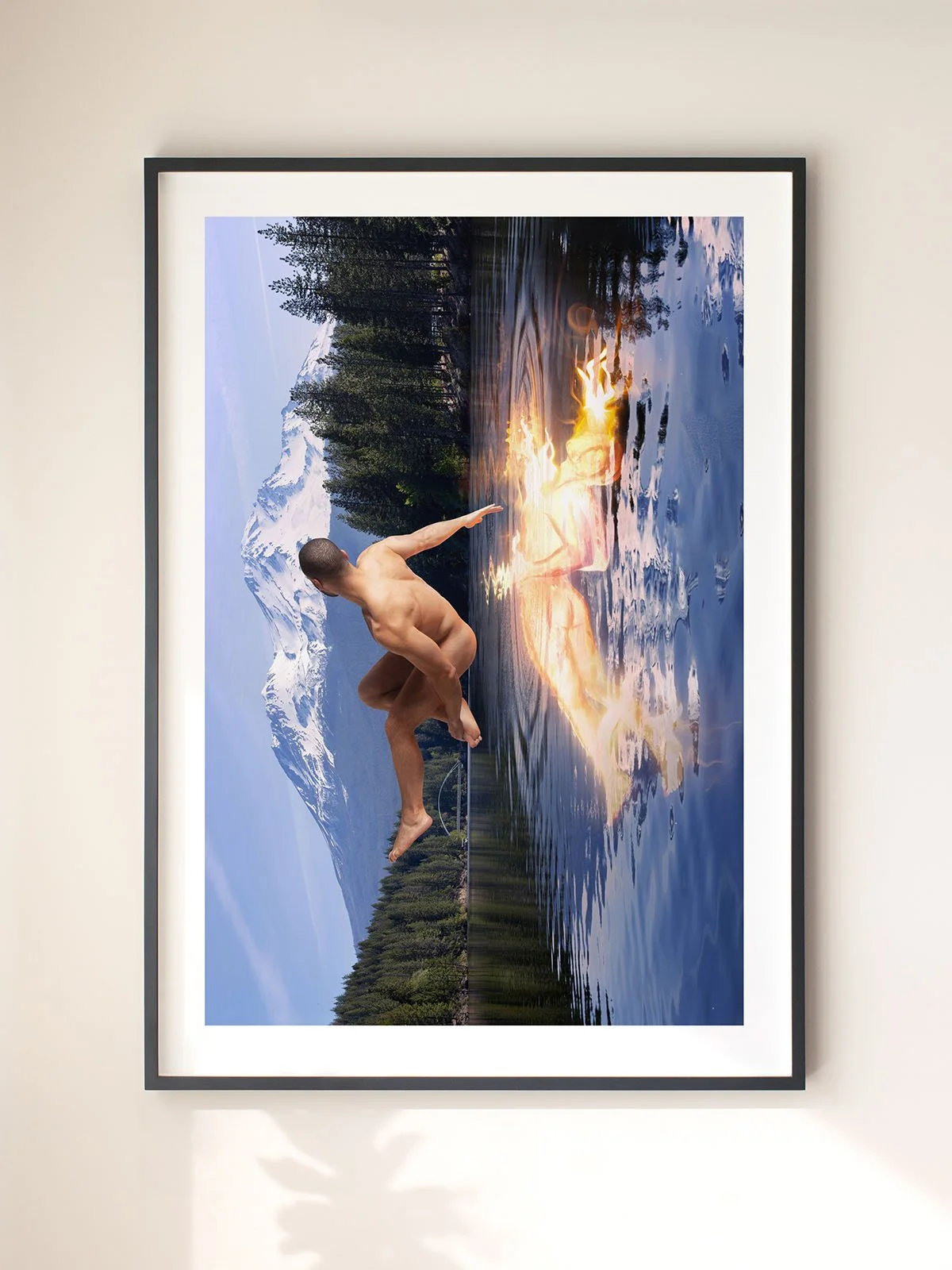
Noº 4/151: I Still Hear the Echoes
Collection: Above the Tree Line
Mount Shasta has a reputation. People travel there, quite seriously, because they believe there are openings in the mountain—thresholds, access points, something just out of sight but not entirely out of reach. The locals tend to be more conservative. The visitors tend to speak as if they’ve just returned from a very meaningful conversation with a rock. The mountain, for its part, offers no clarification.
I had this in mind when I sketched this photo, and before my parents and I drove out early—before sunrise—to photograph it.
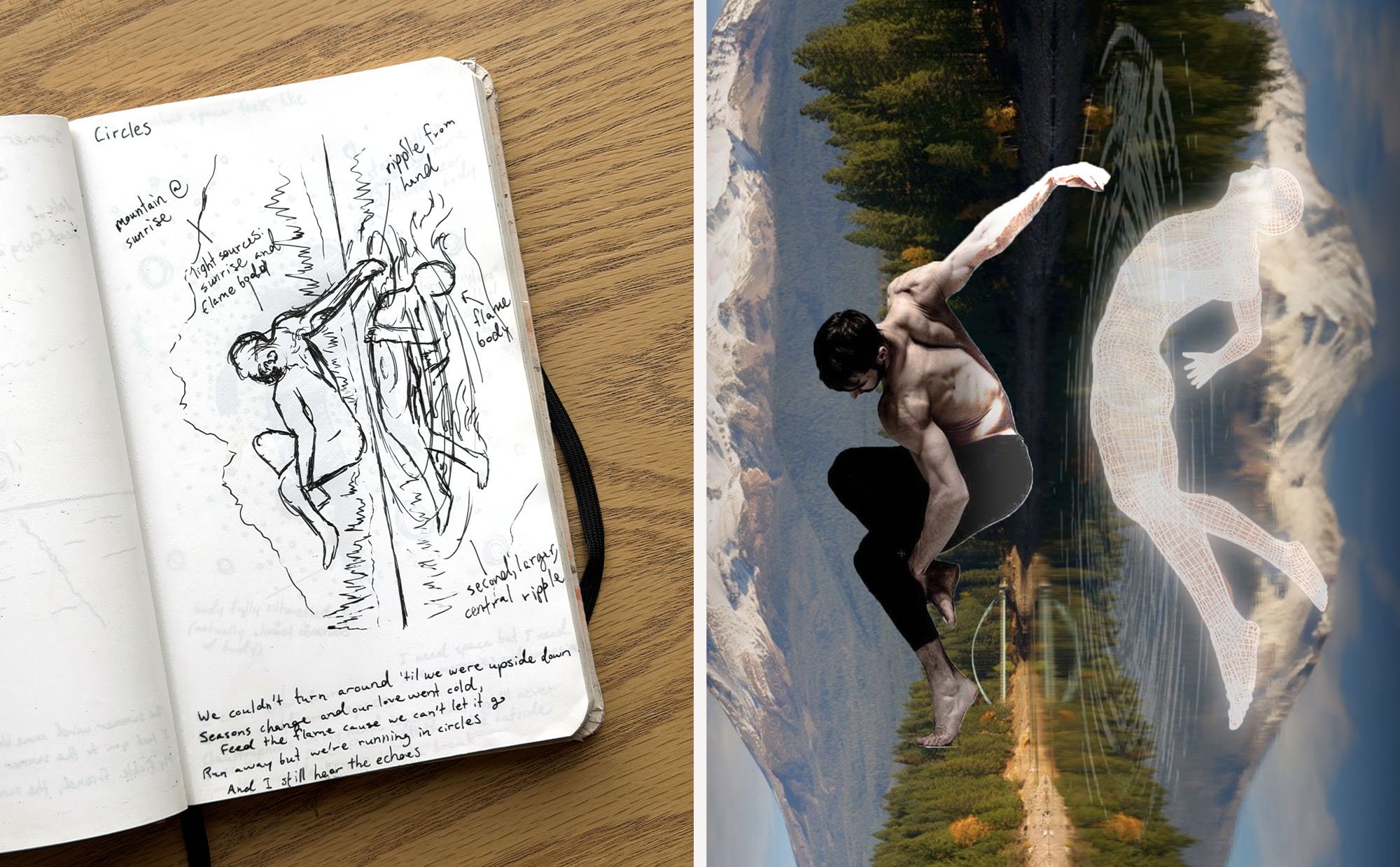
We photographers are good at borrowing other people’s rituals and repurposing them in the name of art.
My father wanted to fish; he would have been up anyway—but we all knew why we were really there. For me. We had to reach a very specific point on Lake Siskiyou before the light changed. Timing, in these situations, becomes less of a preference and more of a small obsession.
Anyway, we get on the boat. It’s cold, it’s early, and the lake is completely still—like a sheet of glass. This is a problem.
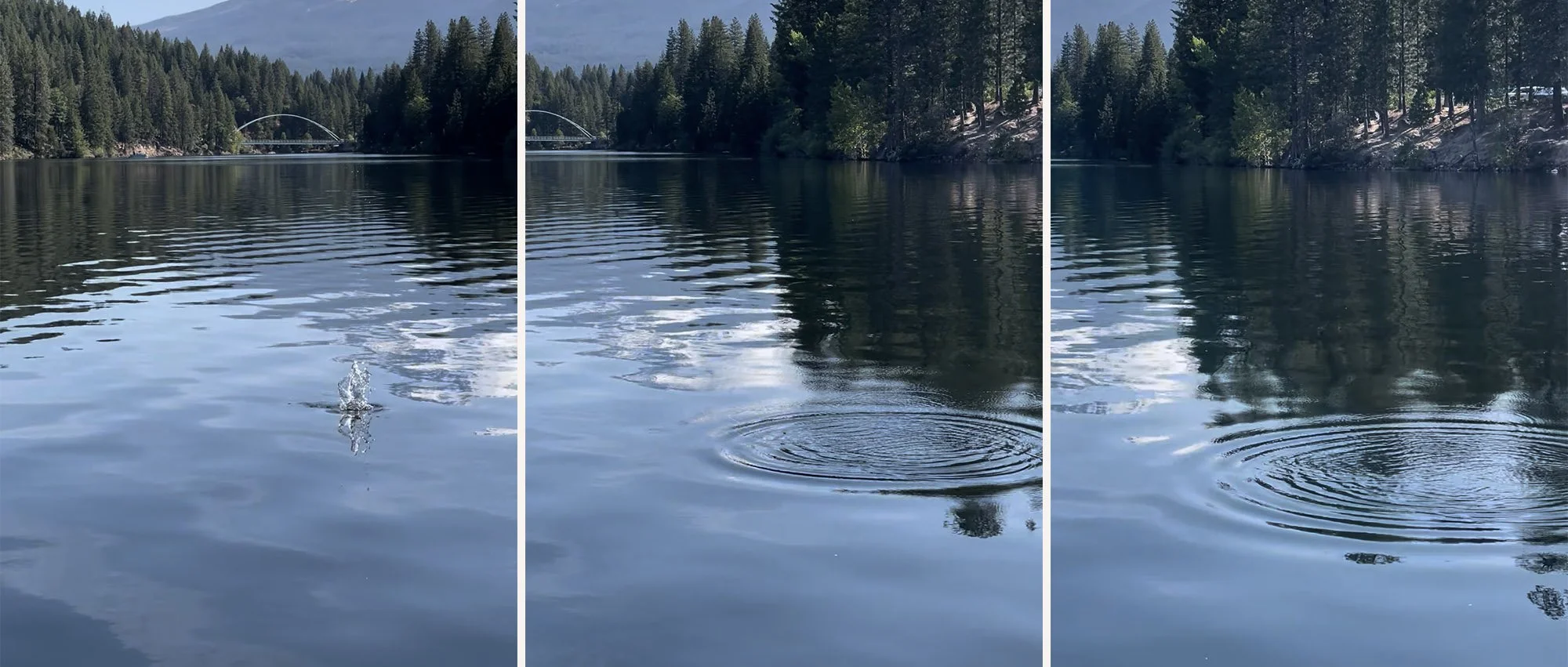
So I ask my father to throw rocks into the water.
“Just throw them. Hard.”
He does it without asking questions, which is either love or resignation. The ripples you see in the photograph—the ones that look like some sort of portal—are actually the result of my father doing what I asked him to do, which is, in many ways, the least mystical explanation possible.
Then there’s the man in the water.
And the one on fire.
Underwater.
The image isn’t trying to describe reality. It’s trying to describe a condition.
The official explanation is that it represents being stuck in a loop—keeping something alive that is clearly trying to die. In my case, a relationship—one of those where nothing is wrong exactly, and yet everything feels slightly off. Not enough to justify leaving. Enough that staying requires effort.
So instead of letting it end, you tend to it.
You feed it.
You build a fire underwater, which is not only impractical but also requires a level of commitment that would be impressive if it weren’t so misguided. The more it drains you, the more responsible you feel for keeping it going. It’s less love at that point and more like maintaining something that depends on you long after it should have learned how to survive on its own.
The image is structured around that tension. On one side, a hand breaking the surface.
On the other, the figure—the fire—held below it. The ripples between them suggest something binding the two together.
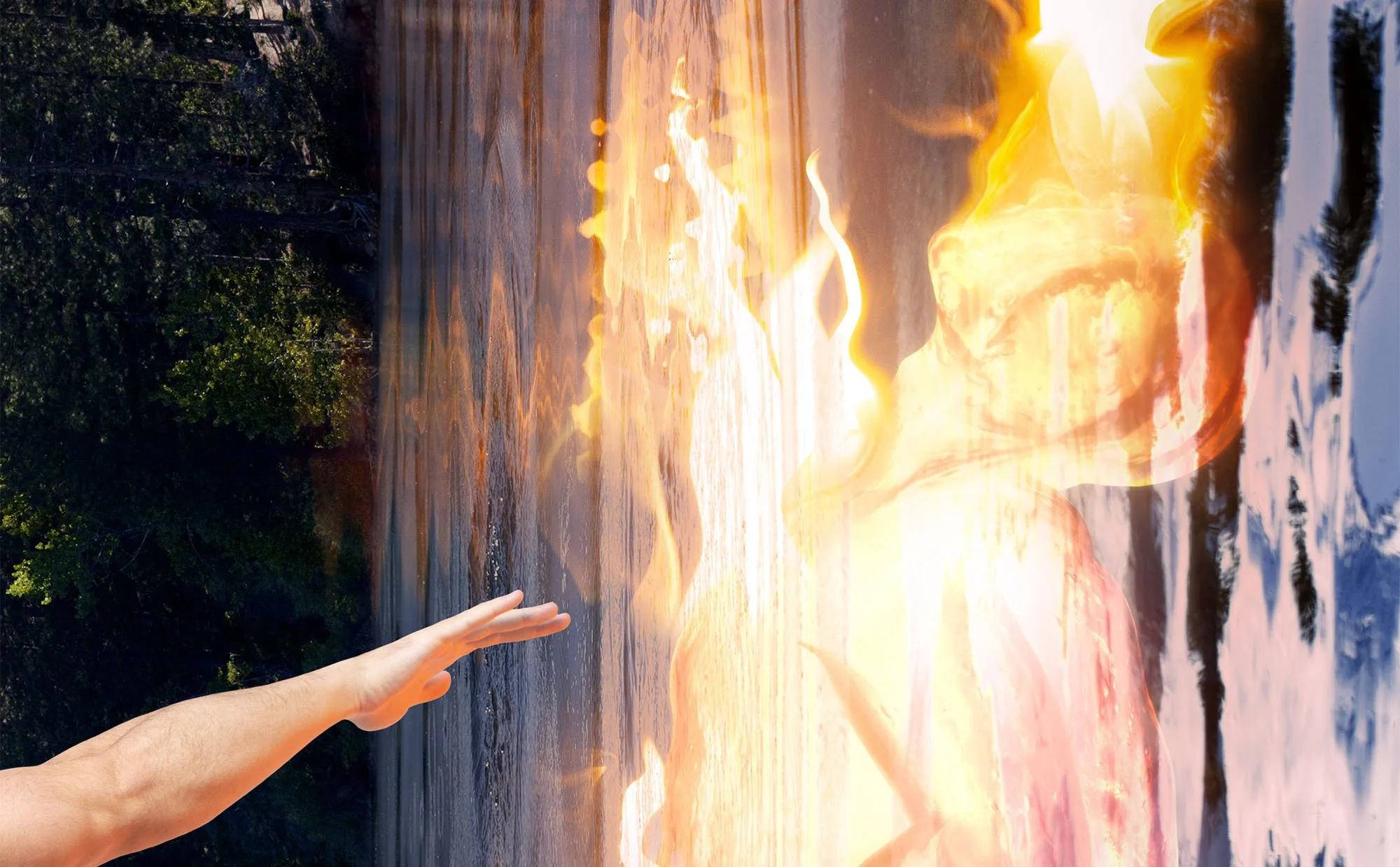
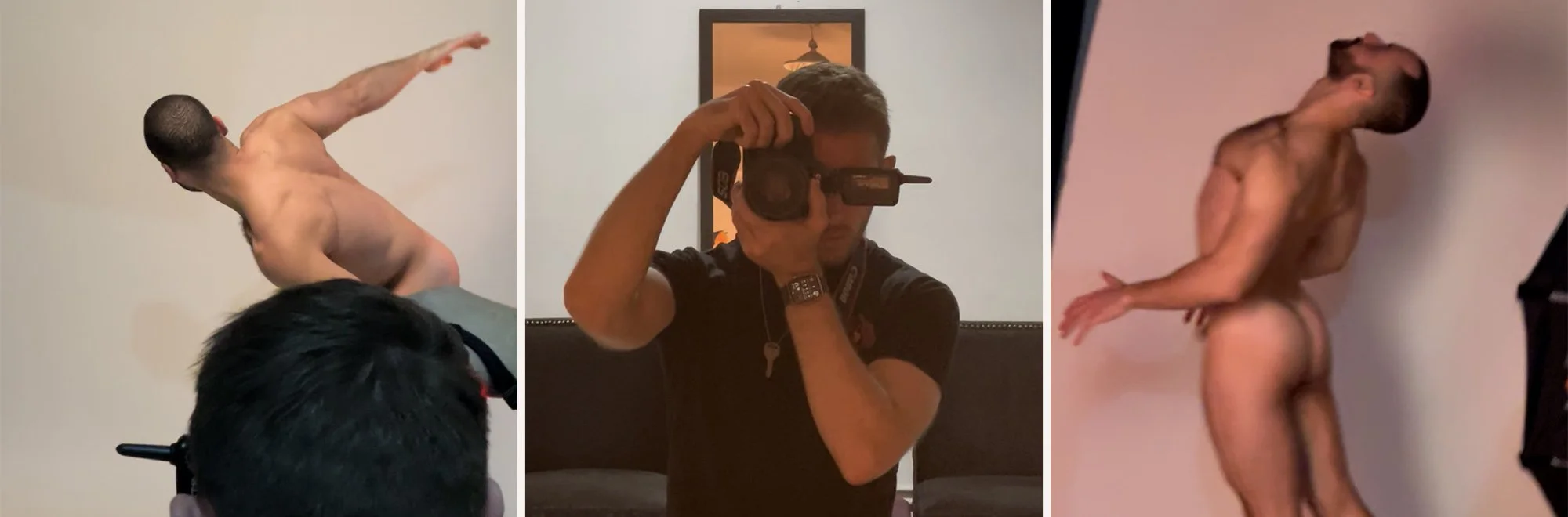
Unlike the model, the fire figure itself didn’t exist in a single moment. It’s assembled from previous lives—pulled from previous work, reused, recombined.
The body comes from an orange glass bottle I’ve used often enough that it’s stopped being a prop and become something closer to a habit. There’s a fragment of a commission in there. The flames come from an earlier experiment, one of the first images I made when I started working this way.
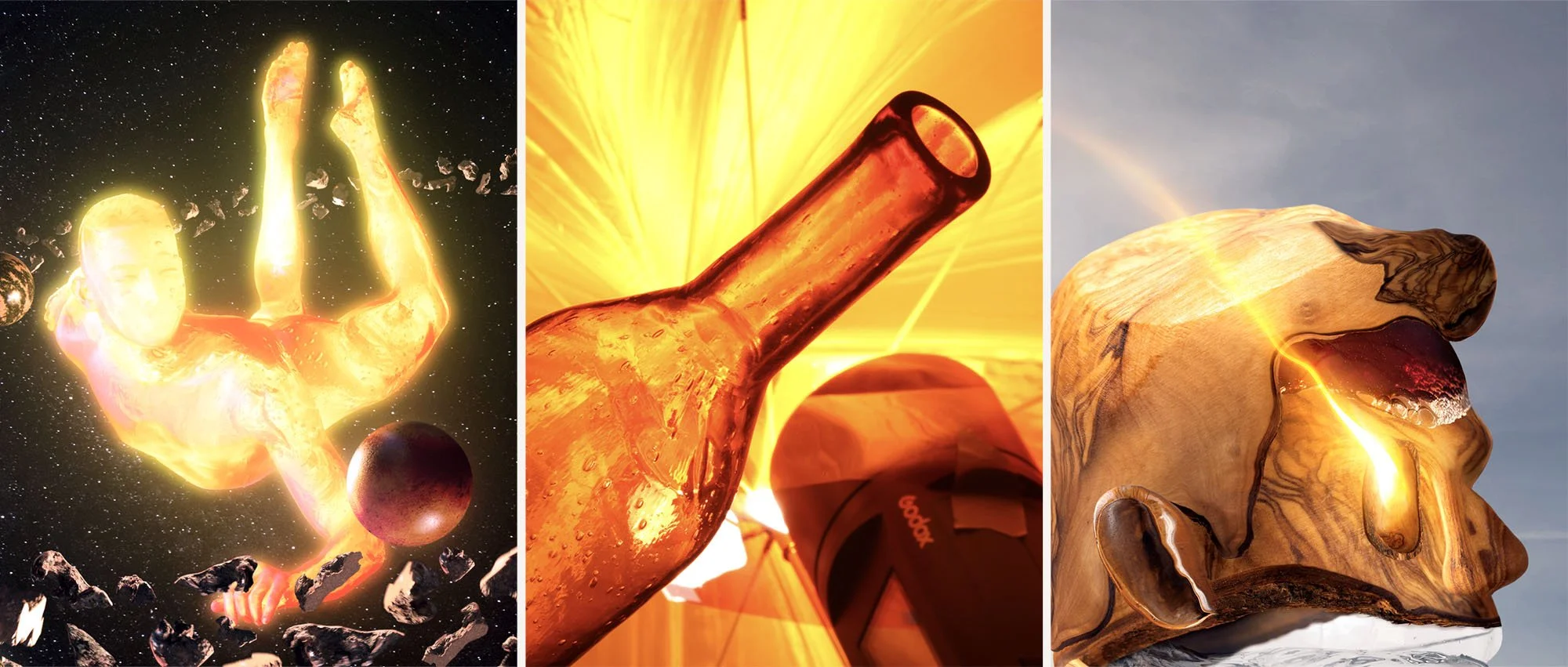
The photograph sits within a four-part series I made around Mount Shasta—images built during the lowest point of that relationship, when things weren’t ending but weren’t functioning either. This one lands in the middle of that cycle.
Not the beginning. Not the aftermath.
The part where you’re still deciding what to do.
The title—I Still Hear the Echoes—isn’t about sound so much as persistence. Echoes are what remain after the original event has ended. Repetitions without a visible source. You’re not responding to the thing itself anymore, just to its echo.
And that’s the loop. The cyclicality of it. The act of feeding something that continues because you continue it.
What I like about the photograph—if “like” is the word—is that it doesn’t solve anything. There’s no tidy conclusion where the fire goes out or the man disappears.
The image doesn’t tell you what to do.
The fire burns.
The water ripples.
The mountain awaits, for you.
Which, if nothing else, feels pretty, and accurate.
If this was worth your time, pass it on.
This work will become a book.
Photographs and field notes by James Miille
Words by Jona Montoya