Story Noº 2 / 151: I Just Need Some Space
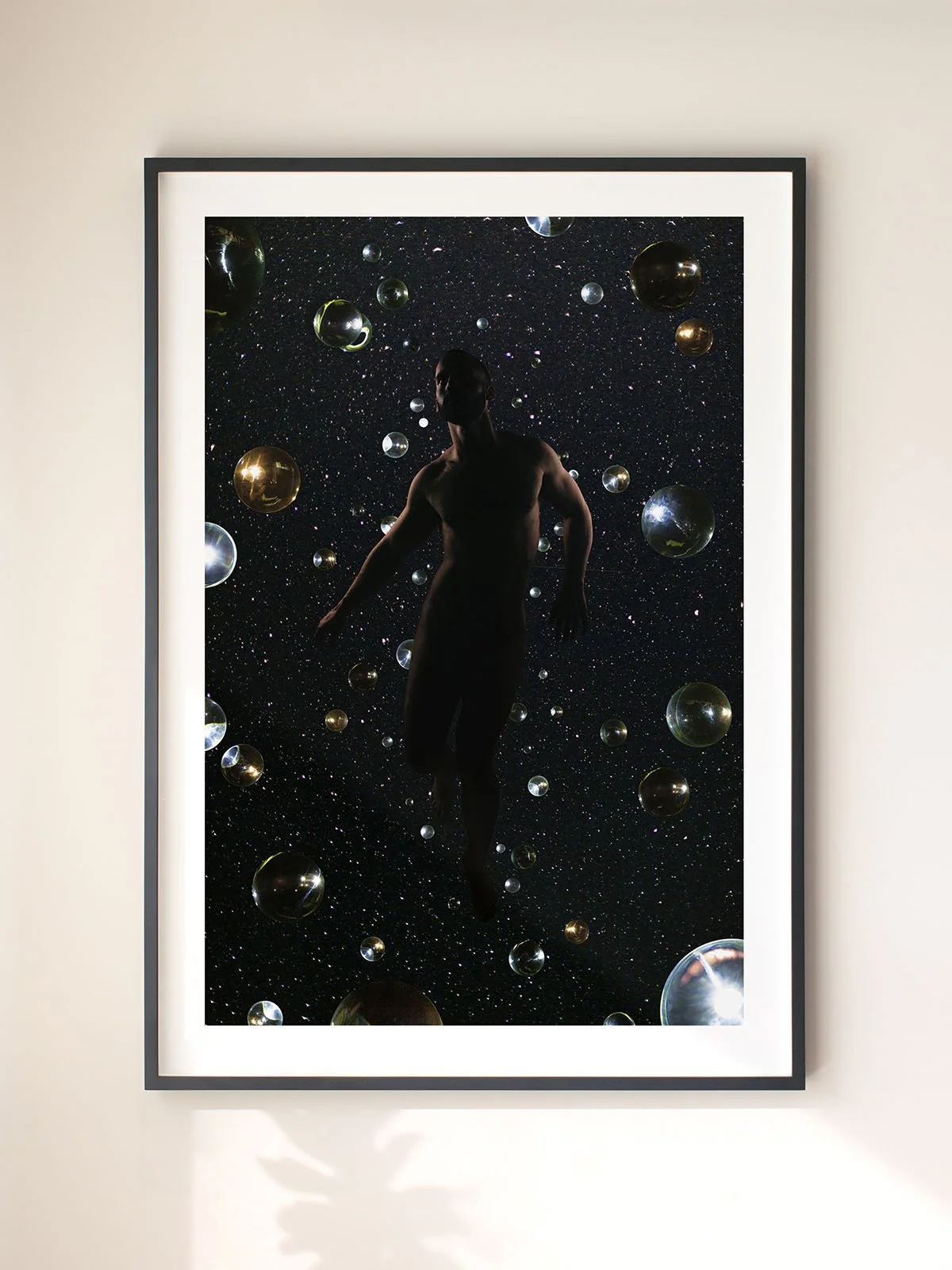
Noº 2/151: I Just Need Some Space
Collection: Beyond the Observatory Roof
There are seasons when the world becomes distant, as if it has stepped slightly away from itself.
I wanted to photograph that feeling.
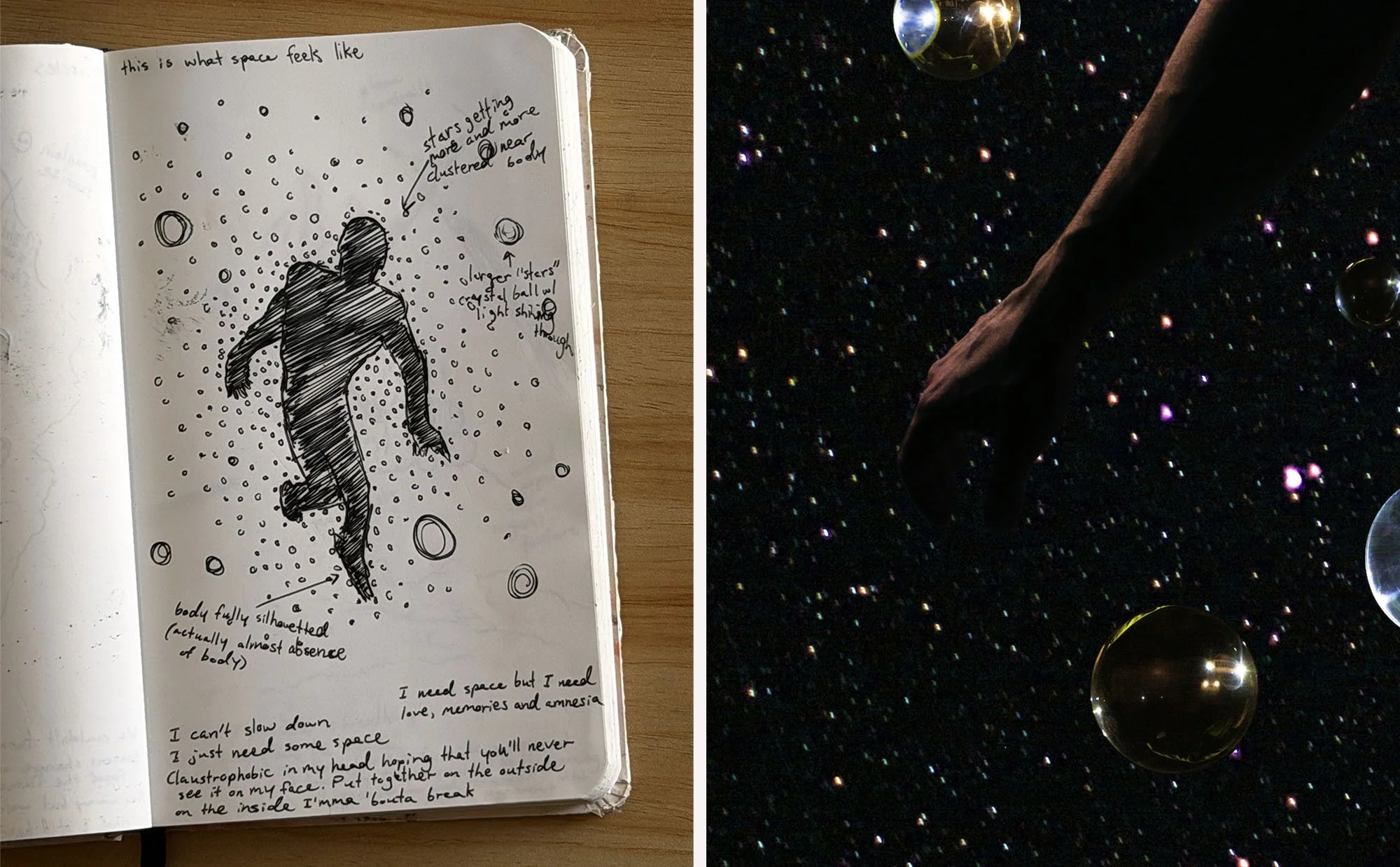
It started with the song “This Is What Space Feels Like” by JVKE. It stayed with me longer than expected—the melody, the suggestion of isolation. Of being far from things you’re meant to recognize.
I wanted the photograph to feel like the far edge of the universe—the point where visibility fails and whatever is there has to be inferred.
So I made it dark. Almost impractically so.
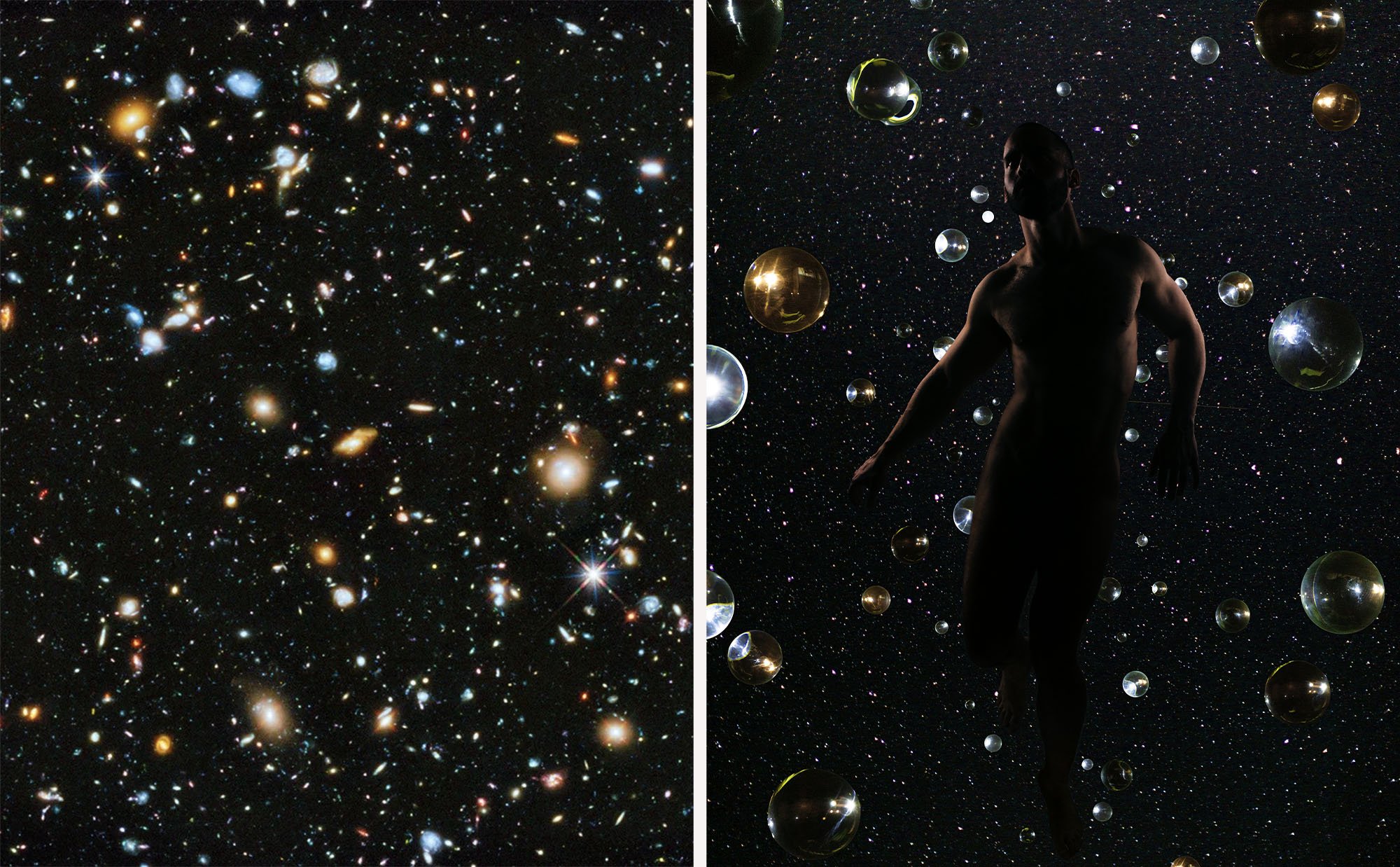
At first, there’s almost nothing. A field of near-total black. No horizon. No ground. No obvious subject. Then, if you give it a few seconds, a disturbance registers—a male figure. Not guiding you anywhere. Not displayed. Not offered. Just implied.
You don’t see it directly. You piece it together. A leg here, an arm there. The shape held together by interruption—light bending around something you can’t see.
Astronomers work this way. They don’t find planets by seeing them. They watch a star flicker—just enough—and from that disruption they can tell you everything. Size. Distance. Orbit. Entire worlds pulled out of a shadow.
That was the logic here.
The body as absence. The subject as something you arrive at slowly, if at all.
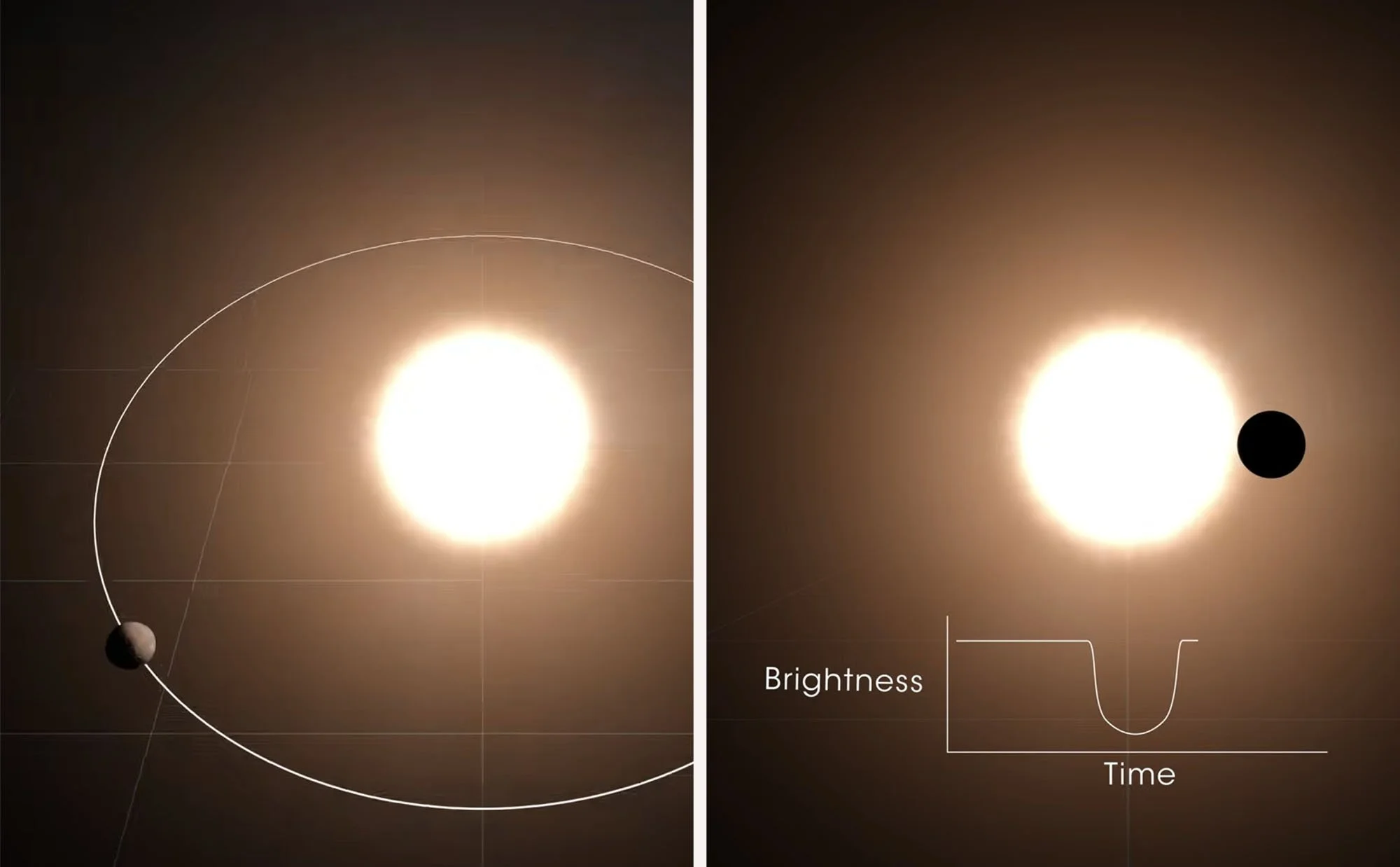
via NASA
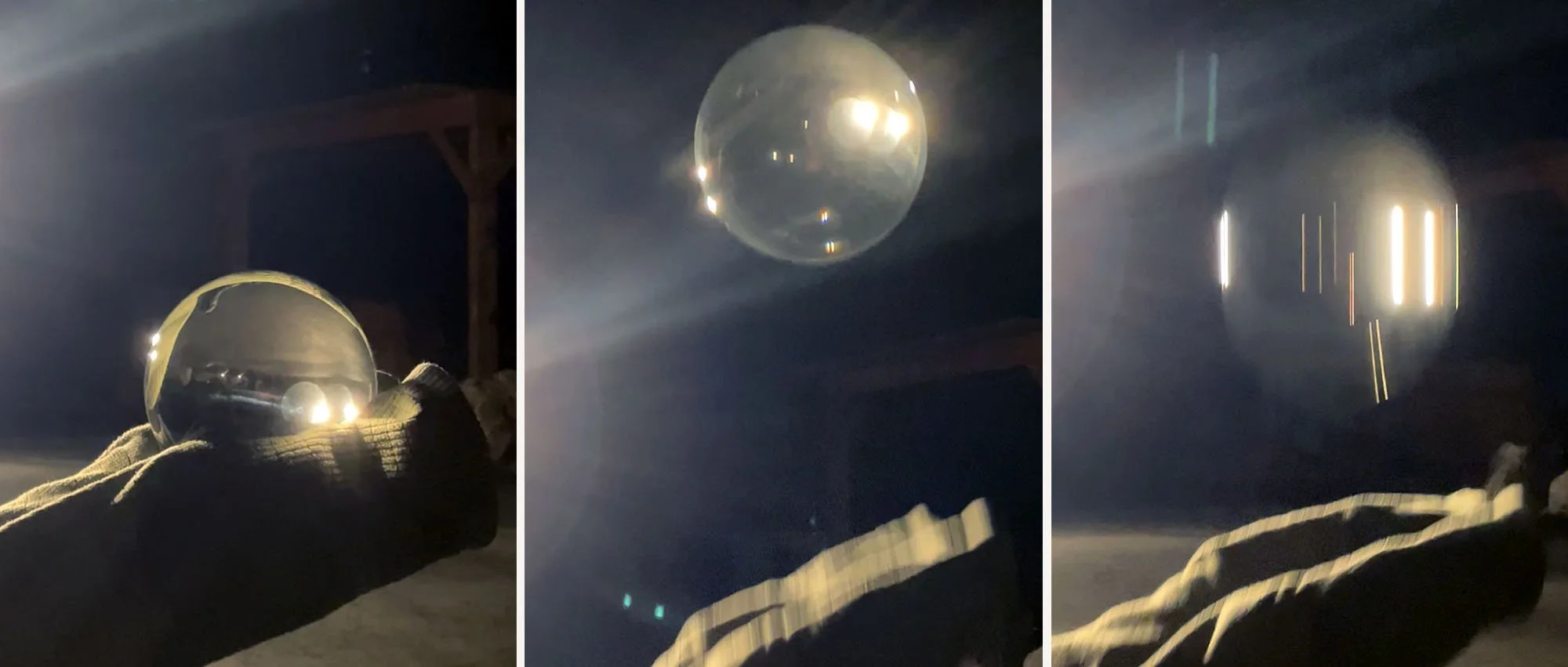
We shot the background in 2024, in Mount Shasta, using nothing more than car headlights cutting into the dark, and my mother throwing a crystal ball into the air, over and over again, while I kept the shutter open.
Each time it rose and fell, it caught the light differently.
It is a strange way to spend time with your mother—standing in the dark, throwing a crystal ball into the night so I could pretend, briefly, that I understood the universe.
The intention was that the spheres would act as an abstraction of stars. Small points of light, suspended in space.
What I didn’t anticipate was how unstable the light would be.
I don’t know why, but the color shifted constantly—greens, golds, occasional blues. No pattern, no control. The ball would pass through the beam and come back altered, as if it had picked up something on the way. It simply did.
At the time, it felt like a flaw.
Later, it looked very familiar—like those deep field images from the Hubble Space Telescope. Dense clusters of colored light, each one carrying a different chemical signature, a different history.
Entire galaxies reduced to points.
Which is impressive, considering most of us can’t even work out what’s happening in our own lives with the lights on.
This wasn’t a neutral period in my life. I needed space in a way that wasn’t negotiable. I felt hurt. I felt lonely. And, inconveniently, I didn’t want anyone near me.
That contradiction is embedded in the image whether the viewer knows it or not.
The darkness is not an aesthetic decision alone. It is a position. The male figure doesn’t disappear—it withholds. It remains, but only just. You can find it if you try. But it won’t come any closer than that.
It stays at the edge.
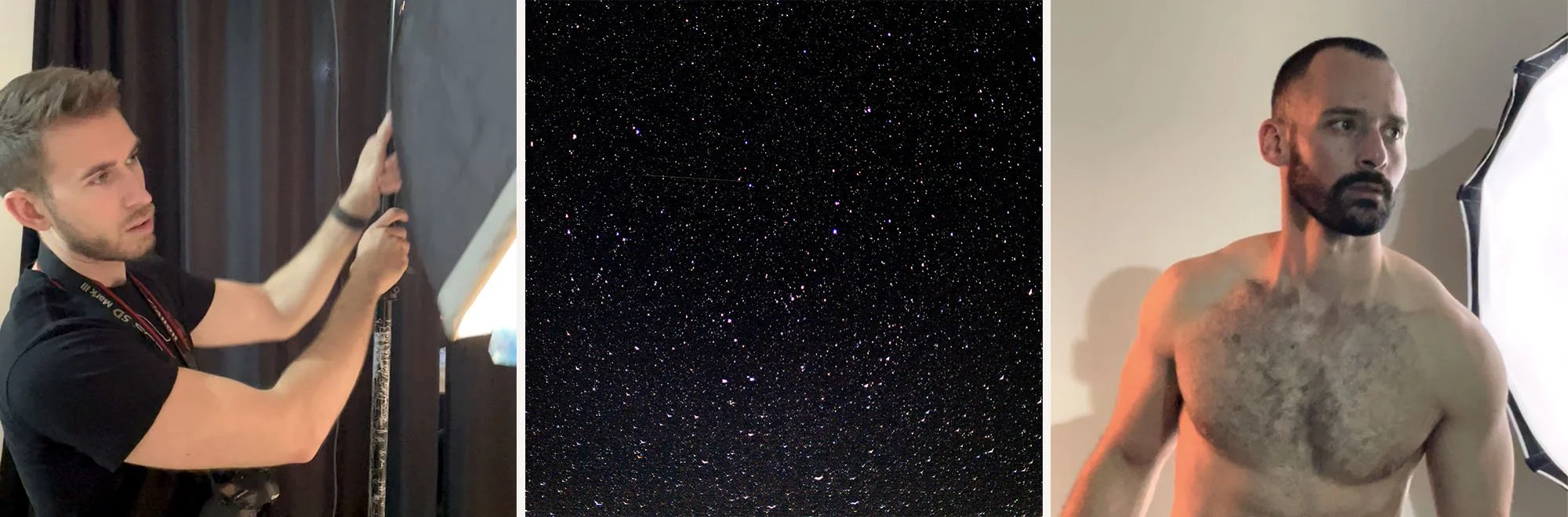
The model—Ricardo, from Miami—I met in a coffee shop in Mexico City. We spoke briefly. He was in the city for a few days. We arranged a shoot. He appears in two photographs from that period, both made under similarly improvised conditions.
There is nothing symbolic about him being there, except that he was.
Which is often enough.
The image never caught attention on Instagram. It was too dark. Bright things do better—people behave, more or less, like moths to flame. This is not that kind of image. It’s closer to a dying ember. You have to lean in. Most don’t.
Yet, it is one of my favorites.
Most photographs try to meet you halfway. They want to be understood quickly. This one doesn’t. It stays where it is. If you want to see it properly, you have to go to it.
And once you do, it offers something precise, and uncomfortable:
The feeling of being present,
even as part of you remains just beyond the light.
If this was worth your time, pass it on.
This work will become a book.
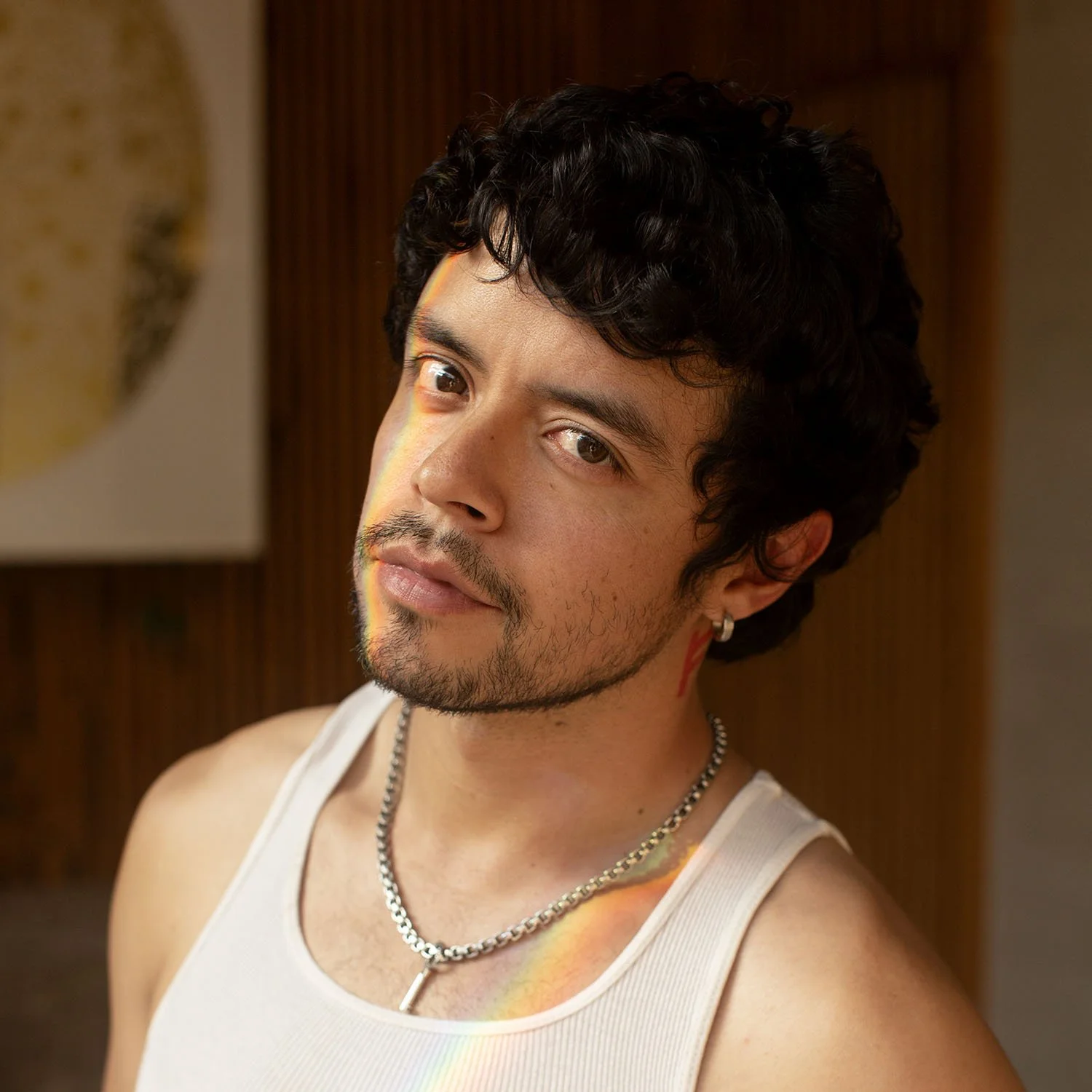
Photographs and field notes by James Miille
Words by Jona Montoya