Story Noº 1 / 151: Where History Resigned
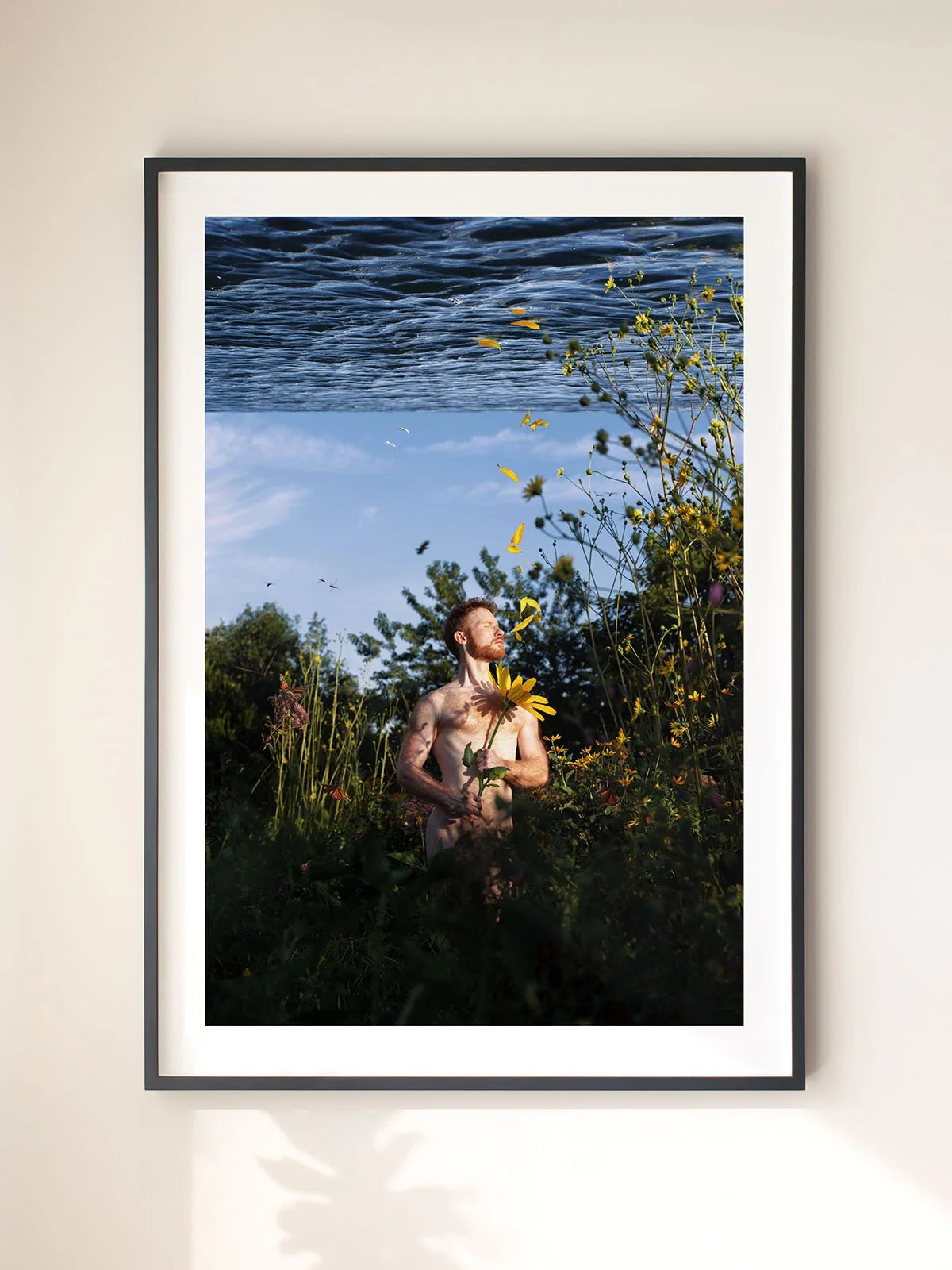
Noº 1/151: Where History Resigned
Collection: Sundays in the Solarium
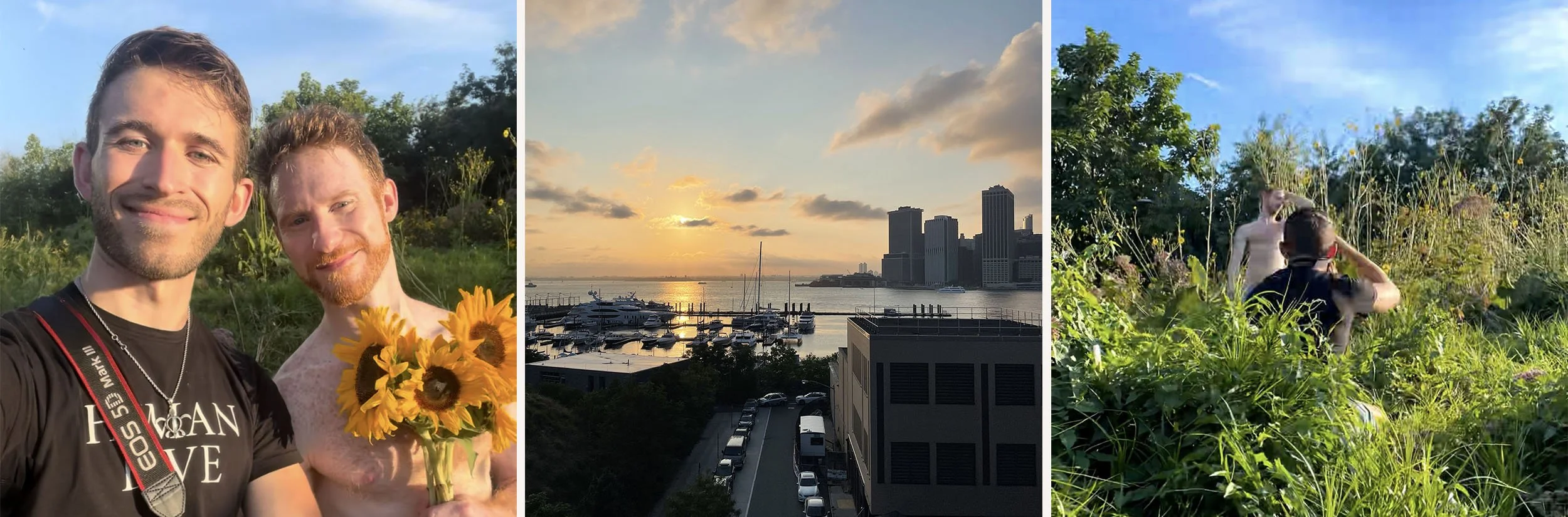
There is a field in Brooklyn Bridge Park that fills with yellow flowers at the very end of summer. If you stand there long enough, Manhattan begins to dissolve across the water. It feels like a mistake—like a piece of countryside briefly misplaced inside New York.
I came across it a few days after returning from Mexico City.
Fields like that don’t last. They arrive, and then they disappear. I had seen it happen before. Give it a week—less, even—and it would be gone. So the photograph had to happen immediately.
The idea was simple: a man standing alone in the flowers. Naked, but not in a confrontational way. More like a body returned to the landscape that produced it.
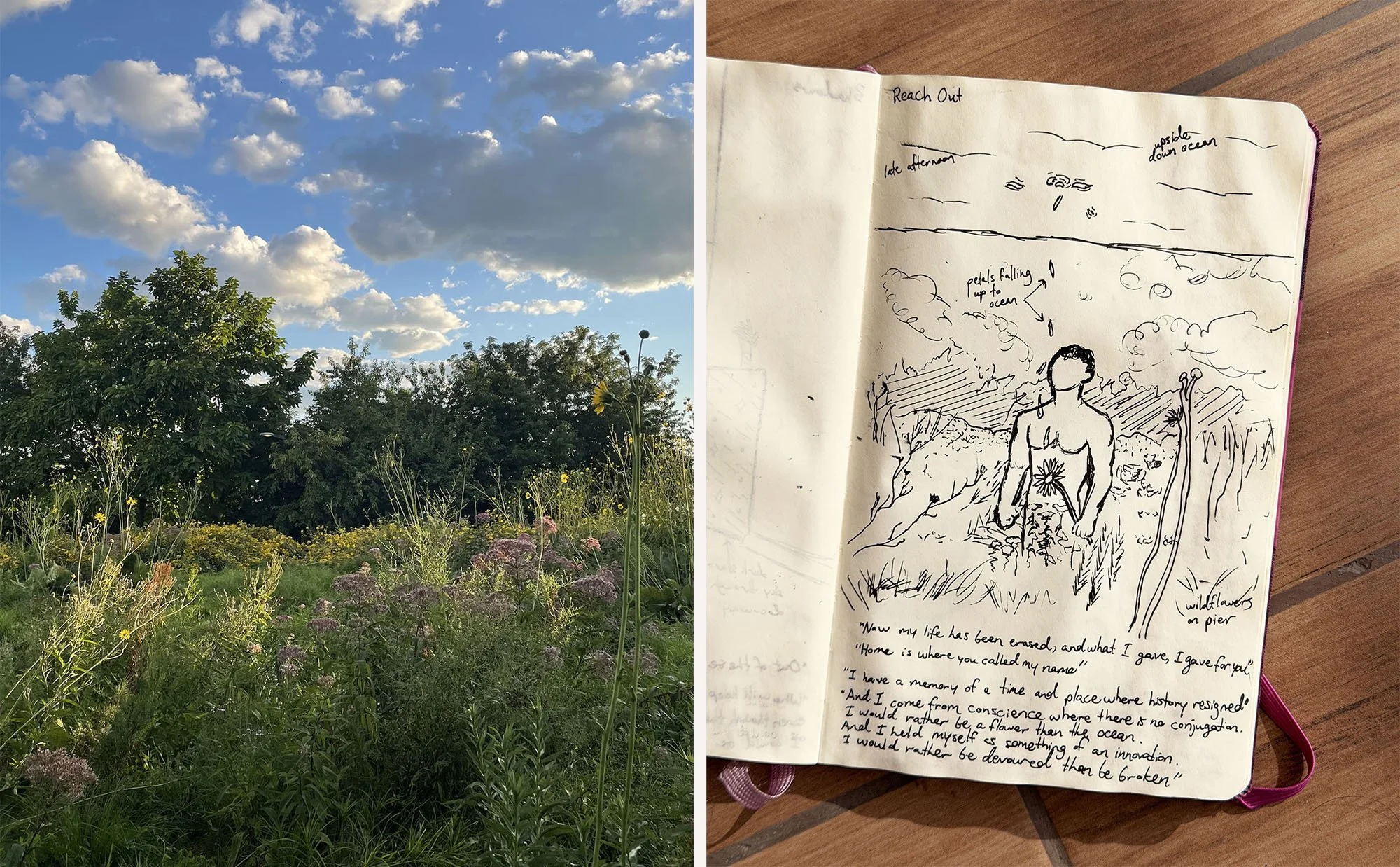
The problem was, as it often is when photographing a naked man in public, that a park is not, as a rule, a natural habitat for a nude man standing in a field of flowers.
People passed nearby: dogs, cyclists, the occasional person stopping to look out at the water. From a certain angle, it might have appeared isolated. But that was only a matter of framing.
The model had absolutely no problem with this.
The park, however, might have.
So I spent hours calling stores across Brooklyn and Manhattan, asking if they had a dancer’s belt in stock—something discreet enough to make a naked body technically acceptable at a glance. Eventually I found one, paid for it over the phone, and had it sent to me. It arrived by Uber while I was already standing in the field, waiting.
I remember holding the small package and thinking that the entire photograph now depended on something so ordinary it almost cancelled the risk entirely.
New York, to its credit, is a city that accepts unusual requests without asking too many questions.
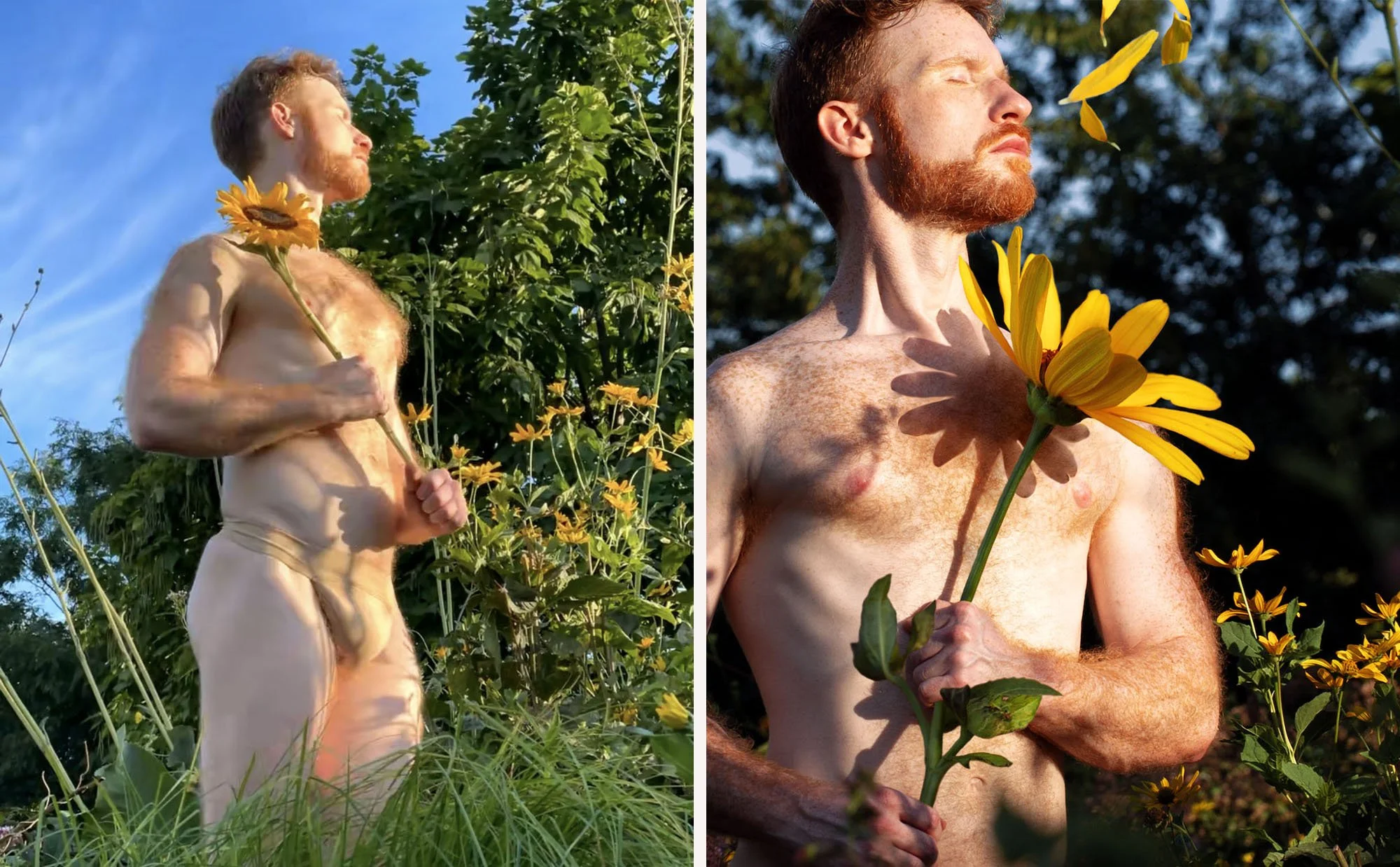
In the photograph, the man is holding a large wild flower.
That wasn’t how it began.
At first, it was a sunflower. But sunflowers are cliché. Too perfect. Too eager to mean something. So later I replaced it with one of the smaller ones growing nearby. I photographed it up close and then made it larger, large enough to exist in his hands.
The shadow, however, did not cooperate.
The body had already been marked by the sunflower’s shape, and shadows are not easily persuaded to become something else. I had to reshape it slowly, adjusting the outline, adding petals, correcting the way light would fall across a surface that no longer existed in the original scene.
It took way longer than I expected.
The same was true for the horizon. The water you see above the field was photographed separately, just beyond it, facing towards the space between Brooklyn Bridge Park and Governors Island. The flowers had to be separated, one by one, so the water could exist between them without disturbing their position.
In some places, I added reflections—small gestures that suggest the flowers are close enough to the surface to leave a trace.
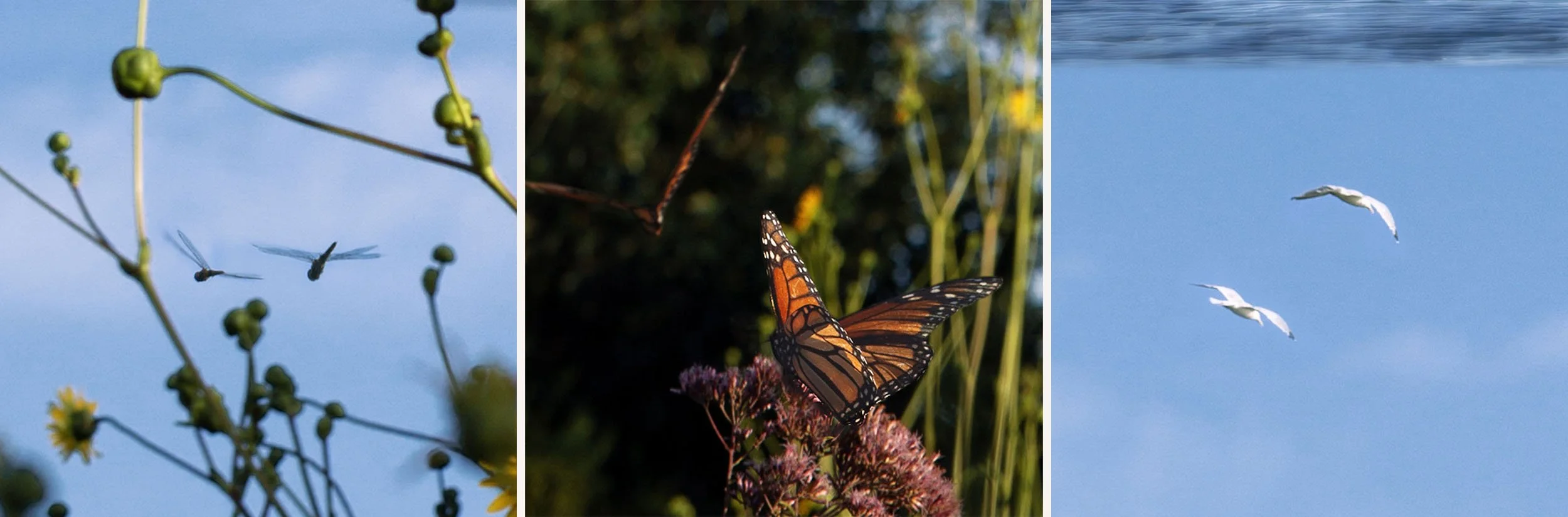
There are also birds, insects, and dragonflies in the image. They were all there that day, though never together. Each one passed through the field at its own time. I photographed them as they appeared and later brought them into the same frame, as if they had briefly agreed to coexist.
It isn’t a single moment. It only looks like one. The field, in other words, is real. The moment is constructed. It had to be.
The photograph comes from a line in a song by Sufjan Stevens:
I would rather be a flower than the ocean.
I thought about that line for a long time.
The ocean is vast. It carries weight, movement, responsibility. A flower does not. A flower exists for a short time, in a specific place, without needing to account for anything beyond itself.
It feels less like a preference than a refusal.
In the image, the body doesn’t dominate the field. It doesn’t even seem entirely separate from it. It could be mistaken for another element—something that happened to grow there, briefly, before disappearing.
A few days after the photograph was taken, the field was cleared.
If you went looking for it now, you wouldn’t find it. There would be no indication that it had ever existed in that form. No flowers, no insects, no sense of accumulation. Just an ordinary stretch of park.
But for a moment, everything was there.
The field. The water. The body. The passing life that never quite aligned in reality, but does here, briefly.
I think that’s what the title means.
Not that history ended.
Only that, in that place, for a brief period of time, it stopped insisting on itself.
And then it continued on, as if nothing had happened.
If this was worth your time, pass it on.
This work will become a book.
Photographs and field notes by James Miille
Words by Jona Montoya